Winding Technology of Film Blowing Machine for Plastic Packaging Bag Factory
1. Main Winding Structures & Classification
1.1 Central Winding (Shaft-driven Core Winding)
Working Principle
Two Sub-types
-
Single-station Central Winding
Equipped with only one rotating shaft. The machine has to stop for roll unloading once fully wound, resulting in high downtime loss. It is mostly adopted on small film blowers and small workshops.
-
Double-station Flip Central Winding
With two winding shafts, the system automatically flips and switches to the second shaft when the first roll is full, realizing non-stop continuous production. It is the standard configuration for single-layer PE film for courier bags and shopping bags.
Advantages
Disadvantages
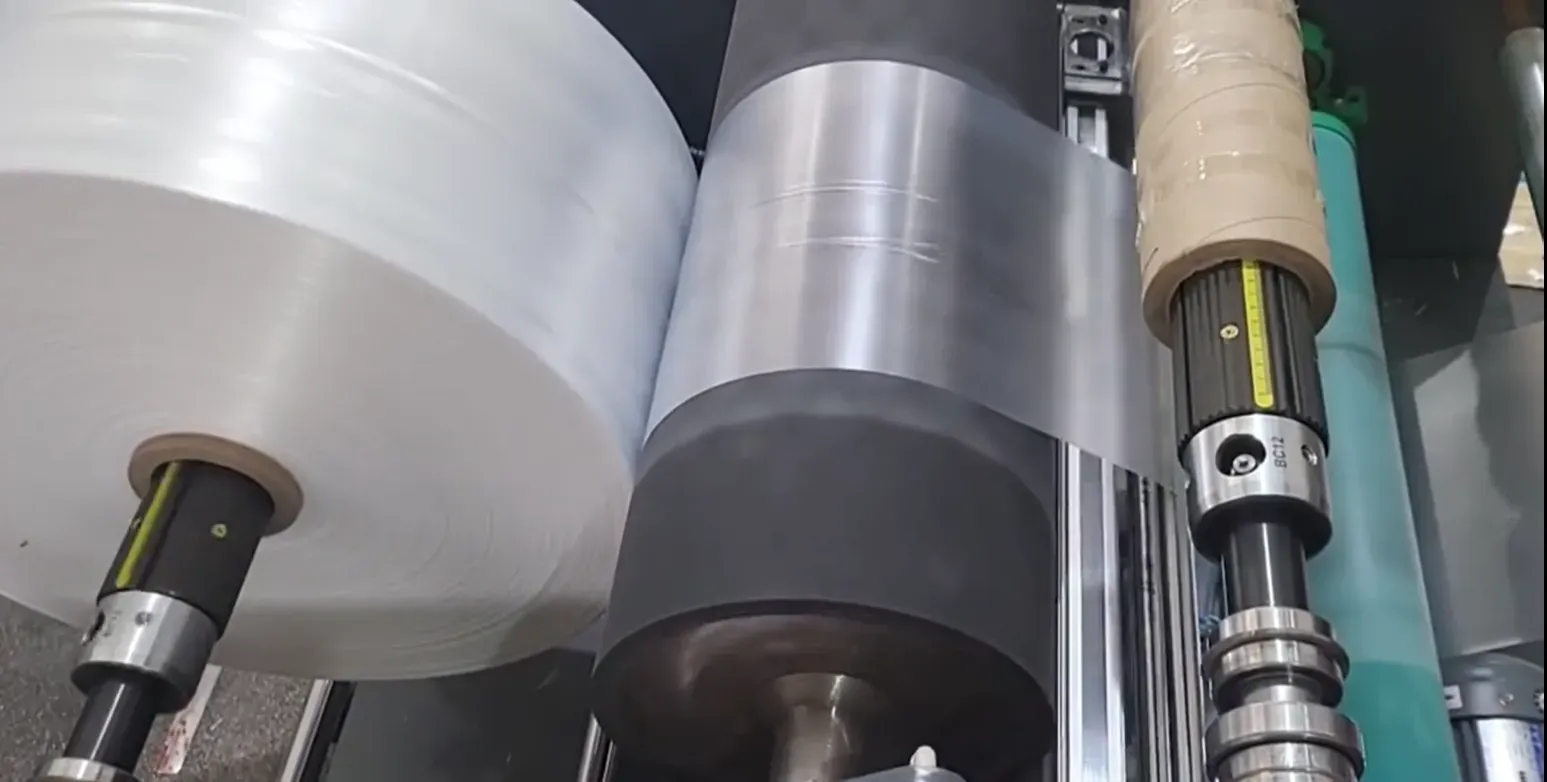
1.2 Surface Friction Winding
Working Principle
Application Scenarios
Advantages
Disadvantages
1.3 Combined Center & Surface Winding (High-end for Co-extruded Films)
2. Winding Classified by Tension Control System
2.1 Passive Damping Tension (Entry-level Simple Model)
Tension is generated by magnetic powder brakes and damping pads with manually adjustable resistance.
Features: Lowest cost, drastic tension fluctuation, easy film elongation and deviation. Only applicable to low-end garbage bags and recycled material packaging films.
2.2 Closed-loop Magnetic Powder Automatic Tension Control (Most Widely Used in Factories)
Complete composition: Tension sensor → PLC controller → Magnetic powder clutch/brake
The system detects real-time film pulling force and automatically corrects winding torque to maintain constant tension throughout the process. Standard for single-layer PE blown films and base films for color printing.
2.3 Servo Vector Constant Tension Winding (High-precision Top Configuration)
Servo motors drive the main winding shaft, calculate roll diameter changes in real time and dynamically match linear speed with millisecond-level tension fine-tuning.
Suitable for high-transparency PP water-cooled downward-blown films, BOPP inner laminated films, ultra-thin 0.01mm food-grade films and base films requiring high-precision color printing. Effectively avoids film stretching and controls elongation rate for ultra-narrow printing registration error.
3. Auxiliary Specialized Winding Technologies in Workshop Production
3.1 Automatic Deviation Correction System (EPC / LPC)
- EPC Edge Position Control: Photoelectric sensors track both edges of the film, and the winding frame shifts horizontally electrically once deviation occurs. Standard for upward-blown PE film blowers.
- LPC Line Position Control: Tracks printed marks or the central reference line of the film, mainly for rewinding pre-printed films, rarely used for raw blown films.
3.2 Slitting Double Winding (Core Capacity Boost Technology)
The flattened tubular film from the flattening frame is longitudinally slit by a circular knife into two independent films, which are wound simultaneously by two sets of winding units.
Applications: Supermarket flat pocket bags, garment self-adhesive bags, single-side folded films.
Advantages: Doubled production capacity under the same host speed, reduced electricity and labor cost per unit; can also do single slitting single winding to produce folded tubular film for courier bags.
3.4 Wrinkle Removal & Spreading Device
- Banana curved spreader roller: Eliminates transverse wrinkles
- Swing spreading frame and pressing rubber rollers: Removes longitudinal folds
Mandatory for ultra-thin mulch films and ultra-thin inner liner films.
3.5 Fixed-length Meter Count Auto Stop & Cutting
3.6 Pressure Press Roller for Roll Compaction
3.7 Auto Pneumatic Cutter & Label Sticker
3.8 Tension Taper Control (Key to Avoid Inner Over-tightening)
- Soft LLDPE film: Taper ratio 8% ~ 15%
- Rigid thick HDPE film: Taper ratio 3% ~ 8%
Without taper setting, inner layers will be locked tightly, causing breakage and excessive elongation during unwinding.
4. Selection Guide for Winding Solutions by Film Type
| Film Type | Recommended Winding Structure | Tension System | Mandatory Accessories |
|---|---|---|---|
| Single-layer LDPE/LLDPE film for courier bags & shopping bags | Double-station central winding | Magnetic powder closed-loop tension + EPC correction | Banana spread roller, fixed meter auto stop |
| Thick rigid HDPE hand-carry bags | Double-station surface friction winding | Magnetic powder tension | Pressure pressing roller |
| High-transparency PP water-cooled downward-blown food film | Combined center & surface winding | Servo constant tension | High-precision EPC, soft polyurethane guide rollers |
| 3/5-layer co-extruded barrier vacuum film | Combined winding | Servo tension + taper control | Double pressing rollers, dust-free guide rollers |
| Recycled garbage bags & industrial inner liner film | Single-station basic central winding | Manual magnetic powder damping | Basic photoelectric deviation correction |
5. Common Winding Defects & Technical Solutions for Machine Tuning
- Tapered roll with uneven two ends → Calibrate EPC sensitivity, level the flattening frame, balance air volume on both sides of the air ring
- Over-tight inner layer causing unwinding breakage & elongation → Activate tension taper function, switch to surface friction winding
- Permanent film wrinkles → Install curved banana spread roller, adjust parallelism of traction rollers
- Middle bulging & air entrapment in rolls → Install pressing roller and lower winding speed
- Scratched film surface → Replace soft PU rubber rollers and reduce friction roller pressure