When you vacuum pack food, air is removed from the package before the bag is sealed. This simple packaging method helps reduce the amount of oxygen surrounding the food and creates a compact, secure package.
From fresh meat and seafood to cheese, vegetables, and processed foods, vacuum packaging is widely used in both commercial and household applications. However, achieving reliable results requires more than simply removing air. The right packaging material, bag structure, sealing performance, and packaging process are all important.
This guide explains how to vacuum pack food, how vacuum packaging works, what bags are commonly used, and what manufacturers should consider when producing food vacuum packaging bags.
What Does Vacuum Pack Food Mean?
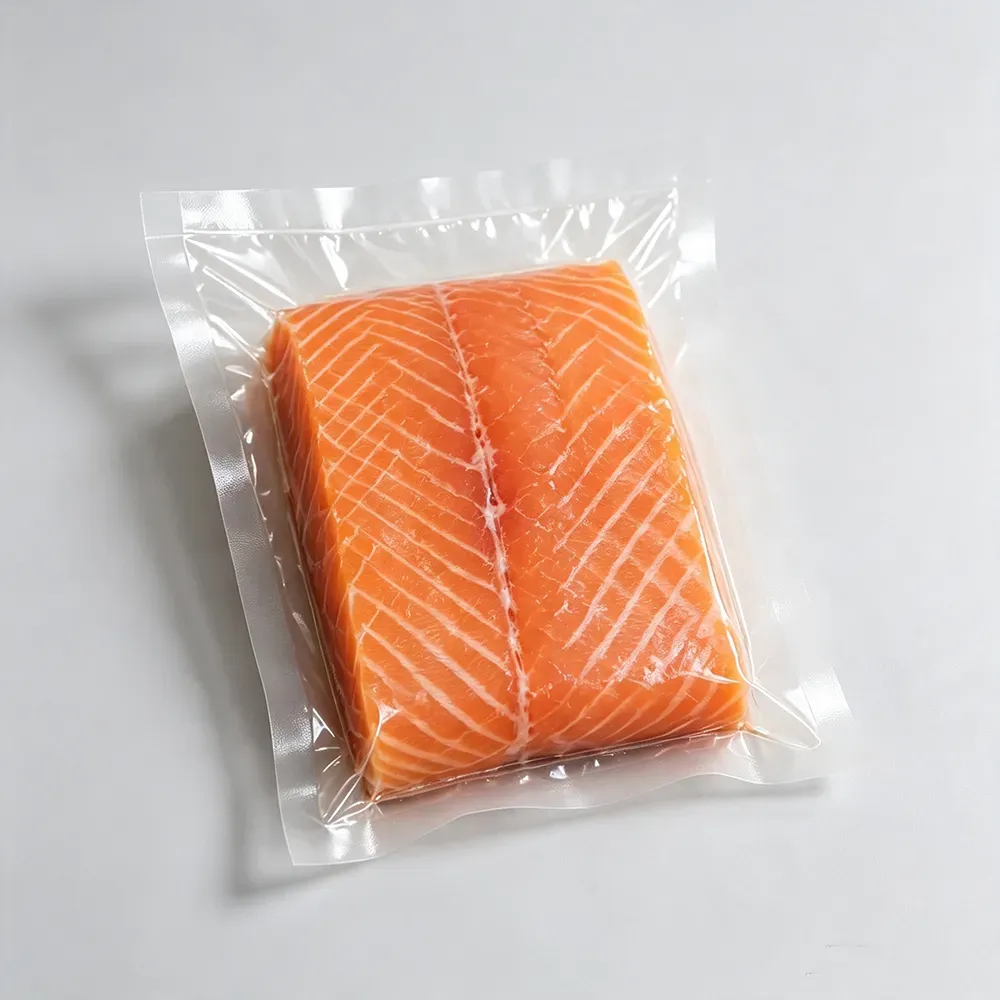
To vacuum pack food means placing food inside a specially designed packaging bag, removing air from inside the package, and then sealing the bag while the air level is reduced.
The basic process is:
Food Loading → Air Extraction → Vacuum Formation → Heat Sealing → Vacuum Packed Food
After the air is removed, the packaging film closely conforms to the shape of the food. The sealed package then provides a compact barrier around the product.
Common foods suitable for vacuum packaging include:
- Fresh meat
- Beef
- Pork
- Chicken
- Seafood
- Fish
- Sausages
- Cheese
- Processed foods
- Vegetables
- Ready-to-eat meals
When businesses vacuum pack food, the packaging needs to be selected according to the characteristics of the product, storage conditions, transportation requirements, and expected shelf life.
How Does Vacuum Packaging Food Work?
The principle behind vacuum packaging is based on air removal and pressure difference.
When food is placed inside a vacuum packaging bag, the machine removes air from the package. As the internal air pressure decreases, the atmospheric pressure outside the bag presses the flexible film against the food.
The bag is then heat sealed to prevent air from entering again.
Therefore, when you vacuum pack food, the machine does not simply “suck” the bag tightly around the product. Instead, it creates a pressure difference between the inside and outside of the package.
The process can be summarized as:
Remove Air → Reduce Internal Pressure → Seal the Bag → Maintain Package Integrity
This is why both the vacuum machine and the packaging bag are important for successful vacuum packaging.
Why Vacuum Pack Food?
There are several reasons manufacturers and food businesses choose to vacuum pack food.
Reduce Oxygen Exposure
Removing air reduces the amount of oxygen surrounding the food. This can help slow certain oxidation processes that may affect food quality.
Improve Package Protection
Vacuum packaging creates a tight package around the product, helping reduce movement inside the bag during transportation and handling.
Save Packaging Space
Once air is removed, the package becomes more compact. This can be useful for storage, transportation, and retail display.
Help Maintain Food Quality
Proper vacuum packaging can help maintain the appearance and overall quality of many foods when combined with appropriate refrigeration or freezing conditions.
Improve Product Presentation
Transparent vacuum packaging allows customers to see the food clearly while providing a neat and compact appearance.
However, vacuum packaging does not replace proper temperature control or food safety practices. Perishable foods still need to be handled and stored according to appropriate food safety requirements.
What Bags Are Used to Vacuum Pack Food?
Not every plastic bag is suitable for vacuum packaging.
Food vacuum packaging bags need to provide a combination of:
- Good heat sealing
- High air-tightness
- Suitable flexibility
- Good puncture resistance
- Good tear resistance
- Appropriate barrier properties
- Food-contact compliance
One common structure for food vacuum packaging is PA/PE.
PA/PE Vacuum Packaging Bags
PA, or polyamide, is commonly used to provide strength and toughness.
PE, or polyethylene, is commonly used as the heat-sealing layer.
A typical PA/PE structure can provide:
PA Layer
- Puncture resistance
- Tensile strength
- Toughness
- Mechanical protection
- Barrier performance
PE Layer
- Heat sealing
- Flexibility
- Good processing characteristics
- Suitable food-contact applications when the appropriate grade is selected
This combination makes PA/PE a popular material structure for food vacuum packaging.
Depending on the food product and required barrier level, manufacturers may also use multilayer structures with additional functional layers.
Why Is Puncture Resistance Important?
Puncture resistance becomes particularly important when you vacuum pack food such as meat, seafood, or bone-in products.
For example, a piece of meat may have a sharp bone edge. During vacuum packaging, the film is pulled tightly against the product.
The sharp edge can create concentrated pressure on the film.
If the film is not strong enough, it may develop:
- Pinholes
- Tears
- Punctures
- Vacuum leakage
Therefore, the material thickness and film structure should be selected according to the product.
For products with sharp edges, manufacturers may recommend a stronger film structure or higher puncture resistance.
Why Is Heat Sealing Important?
Heat sealing is one of the most critical steps when you vacuum pack food.
After air extraction, the bag opening must be sealed securely. Otherwise, air can gradually enter the package and the vacuum effect will be lost.
Several factors affect the sealing performance:
| Factor | Importance |
|---|---|
| Sealing Temperature | Controls proper melting of the sealing layer |
| Sealing Pressure | Helps create a uniform seal |
| Sealing Time | Determines heat exposure |
| Seal Width | Affects overall sealing strength |
| Film Structure | Determines heat-sealing characteristics |
| Bag Opening | Should remain clean and flat |
Food residue, oil, water, or meat juice around the sealing area can interfere with sealing.
For this reason, the sealing area should be kept as clean and flat as possible before vacuum sealing.
Vacuum Pack Food: Manufacturing Requirements
From a manufacturing perspective, food vacuum packaging requires stricter control than many ordinary plastic bags.
A typical manufacturing process is:
Raw Material Preparation
↓
Film Extrusion
↓
Printing / Lamination if Required
↓
Curing
↓
Slitting
↓
Bag Making
↓
Heat Sealing
↓
Quality Inspection
↓
Packing & Shipment
The exact process depends on the bag structure and application.
Film Extrusion
The first step is producing the required plastic film.
Depending on the material structure, manufacturers may use blown film or cast film extrusion.
Film thickness needs to remain consistent because variations can affect:
- Strength
- Sealing
- Appearance
- Puncture resistance
- Packaging performance
For food applications, suitable food-contact materials should be selected according to the target market and application.
Lamination for Multilayer Bags
For multilayer food vacuum packaging, different films may be laminated together.
The purpose is to combine different properties in one packaging structure.
For example:
Strength + Barrier + Heat Sealing
The lamination process must provide sufficient bonding between the different layers.
Poor lamination can cause delamination during packaging, transportation, or storage.
Bag Making
After the film is produced and processed, it is converted into finished food vacuum packaging bags.
Common bag styles include:
- Three-side seal bags
- Side-seal bags
- Center-seal bags
- Custom-size vacuum bags
- Embossed vacuum bags
- Vacuum rollstock
The bag dimensions should match the food product and the vacuum packaging machine.
Quality Control for Food Vacuum Packaging Bags
If you want to vacuum pack food reliably, quality control is essential.
Manufacturers commonly inspect:
Film Thickness
Consistent thickness helps maintain stable mechanical and sealing performance.
Seal Strength
The seal should remain intact during vacuum extraction, transportation, storage, and handling.
Puncture Resistance
This is especially important for meat, seafood, and products with bones or sharp edges.
Air-Tightness
The finished bag should prevent unwanted air from entering after sealing.
Lamination Strength
For multilayer films, the layers must remain firmly bonded together.
Bag Dimensions
Accurate dimensions help ensure proper operation on vacuum packaging machines.
Appearance
The finished bags should be checked for wrinkles, contamination, defects, and other visible problems.
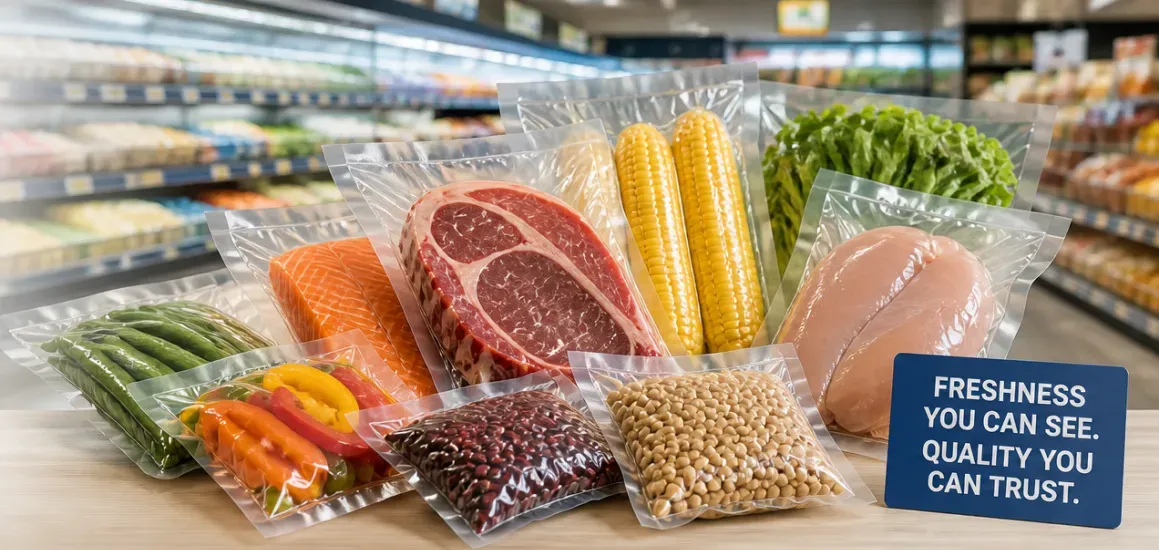
Common Applications of Vacuum Pack Food
The vacuum pack food method is widely used in different food categories.
Meat
Fresh beef, pork, chicken, lamb, and other meat products can be packaged using suitable vacuum packaging materials.
Seafood
Fish, shrimp, shellfish, and other seafood products are commonly vacuum packed for storage and transportation.
Processed Food
Sausages, ham, cooked meat, and other processed foods can be packaged in vacuum bags.
Cheese
Vacuum packaging can provide a compact packaging solution for many cheese products.
Vegetables
Certain vegetables can also be packaged using vacuum technology when the product and storage conditions are appropriate.
Ready-to-Eat Food
Prepared meals and other ready-to-eat products can use vacuum packaging as part of their overall packaging system.
Vacuum Pack Food vs. Ordinary Food Packaging
| Feature | Vacuum Packaging | Ordinary Food Packaging |
|---|---|---|
| Air Removal | Yes | Usually No |
| Oxygen Exposure | Reduced | Generally Higher |
| Package Shape | Tight and compact | More flexible |
| Material Requirements | Higher | Application dependent |
| Puncture Resistance | Important | Depends on product |
| Sealing Performance | Critical | Important |
| Common Materials | PA/PE, multilayer films | PE, PP, PET and others |
| Typical Applications | Meat, seafood, cheese, processed food | Wide range of foods |
The main difference is that vacuum packaging actively removes air before sealing, while conventional food packaging generally seals the product without removing most of the internal air.
How to Choose Bags to Vacuum Pack Food
Before purchasing food vacuum packaging bags, buyers should consider several factors.
1. Food Type
Different products have different packaging requirements.
Soft products may require different puncture resistance compared with bone-in meat or seafood.
2. Bag Size
The bag should provide enough space for the food product and a suitable sealing area.
3. Film Thickness
Film thickness should be selected according to product weight, shape, handling, and puncture risk.
4. Barrier Requirements
Foods that are sensitive to oxygen or moisture may require higher-barrier packaging structures.
5. Sealing Requirements
The bag should be compatible with the temperature, pressure, and sealing conditions of the vacuum packaging machine.
6. Food Contact Compliance
For food applications, the packaging material should meet the applicable food-contact requirements of the target market.
7. Packaging Equipment
Different vacuum machines may use different bag formats. Buyers should confirm the bag size, material, and thickness before placing an order.
Conclusion
To vacuum pack food, air is removed from the packaging bag before the opening is heat sealed. The reduced internal pressure allows atmospheric pressure to press the flexible film tightly against the food.
The effectiveness of vacuum packaging depends on more than the vacuum machine. The packaging material, film structure, puncture resistance, heat-sealing performance, bag dimensions, and air-tightness all play important roles.
For food manufacturers, distributors, and packaging buyers, choosing the right vacuum packaging bag is essential. PA/PE and other multilayer structures are commonly used because they can combine strength, flexibility, barrier performance, and heat sealing in one packaging solution.
With the right material and manufacturing process, vacuum pack food packaging can provide a compact, secure, and professional solution for meat, seafood, cheese, processed foods, and many other food products.