Introduction
Plastic Packaging Bag Certifications are official certifications, compliance documents, and testing reports that verify plastic packaging products meet international standards for safety, quality, environmental protection, and regulatory compliance. These certifications demonstrate that packaging materials are suitable for their intended applications, such as food packaging, medical packaging, industrial packaging, and retail packaging.
For manufacturers, obtaining recognized certifications helps build customer trust, improve product credibility, and expand into global markets. For buyers, these documents provide assurance that the packaging complies with regulations in target markets and meets the required quality and safety standards.
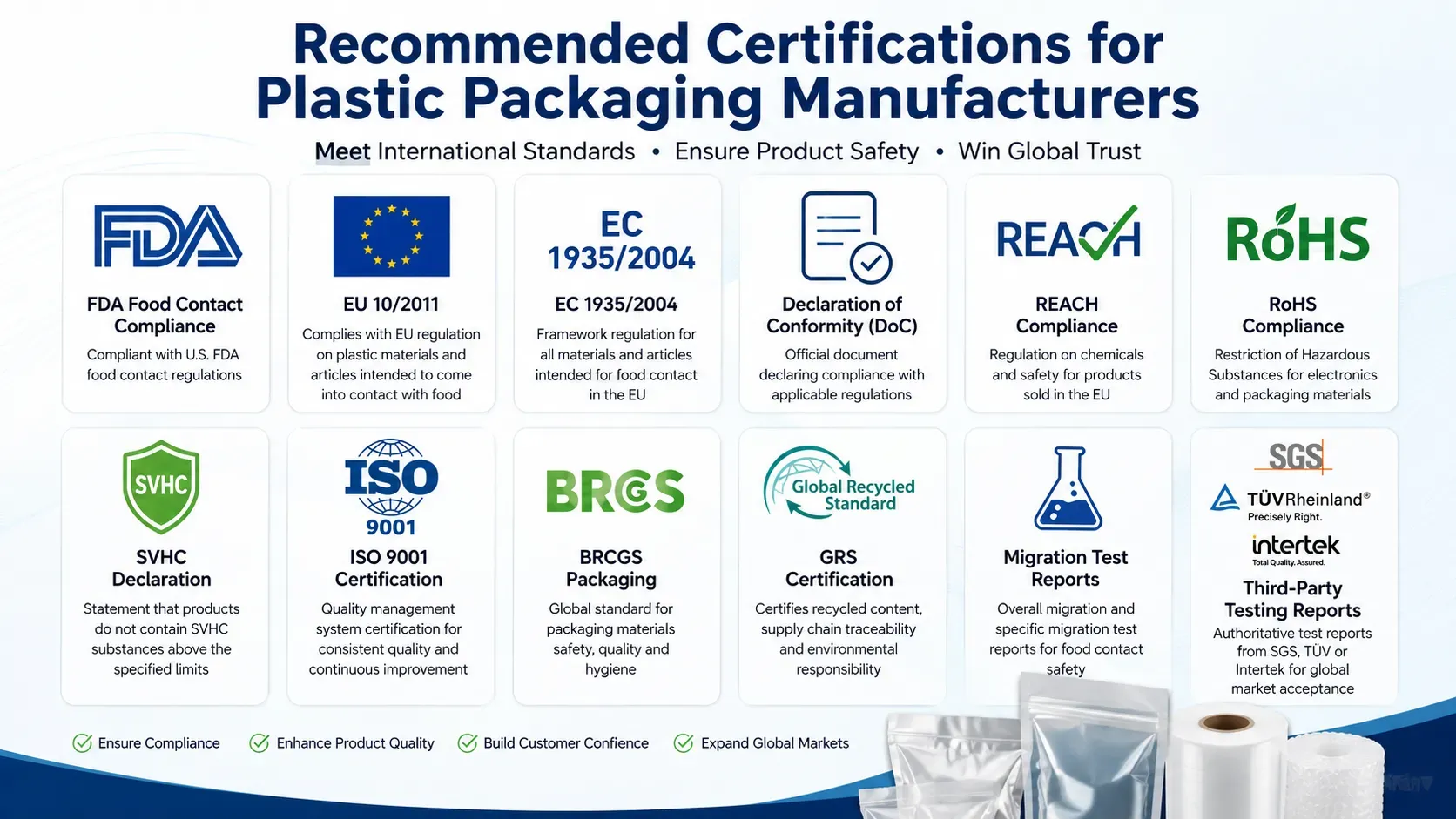
Common Plastic Packaging Bag Certifications include FDA Food Contact Compliance, EU 10/2011, EC 1935/2004, Declaration of Conformity (DoC), REACH Compliance, RoHS Compliance, ISO 9001 Certification, BRCGS Packaging, GRS Certification, and third-party laboratory testing reports from organizations such as SGS, TÜV, and Intertek.
Why Are Certifications Important?
Plastic packaging certifications help manufacturers:
- Meet international regulations
- Ensure food safety and product quality
- Demonstrate environmental responsibility
- Increase customer confidence
- Facilitate exports to global markets
- Win projects from large retailers and brand owners
Many international buyers require suppliers to provide certification documents before placing bulk orders.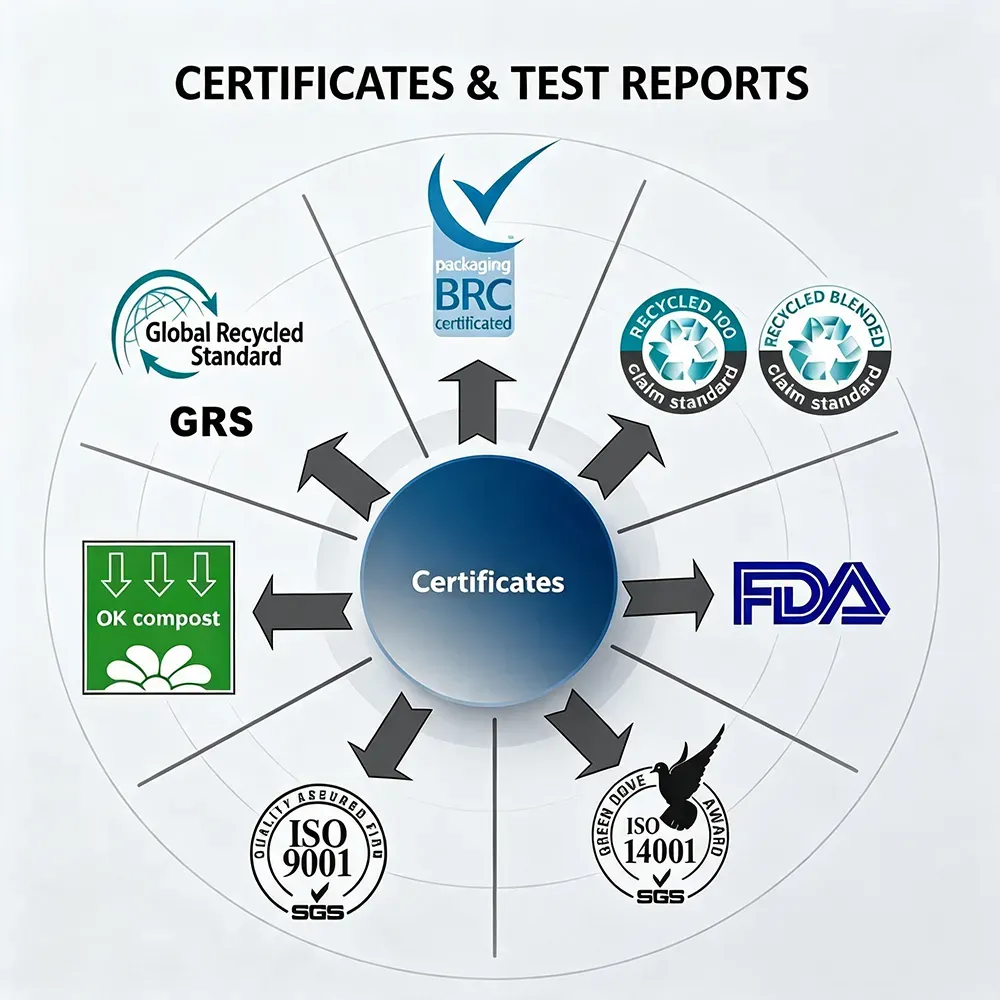
1. FDA Food Contact Compliance
Applicable Market: United States
FDA compliance is one of the most requested certifications for food-grade plastic packaging. It verifies that the materials used are suitable for direct food contact and comply with U.S. food safety regulations.
Common products include:
- Food Packaging Bags
- Zip Lock Bags
- Vacuum Bags
- Frozen Food Bags
- Coffee Packaging Bags
- Stand Up Pouches
Typical documents:
- FDA Compliance Certificate
- FDA Food Contact Test Report
2. EU 10/2011 Compliance
Applicable Market: European Union
EU Regulation 10/2011 establishes safety requirements for plastic materials intended to come into contact with food.
Testing usually includes:
- Overall Migration Test
- Specific Migration Test
- Material Composition Analysis
- Authorized Additives Verification
This regulation is essential for exporting food packaging products to European countries.
3. EC 1935/2004 Food Contact Regulation
Applicable Market: European Union
EC 1935/2004 is the framework regulation governing all food contact materials in Europe.
It ensures that packaging materials:
- Do not transfer harmful substances into food
- Do not alter food taste or smell
- Do not affect food composition
Most European food packaging products must comply with both EC 1935/2004 and EU 10/2011.
4. Declaration of Conformity (DoC)
A Declaration of Conformity (DoC) is an official document issued by the manufacturer stating that the packaging complies with applicable regulations.
A standard DoC typically includes:
- Product information
- Material specification
- Applicable regulations
- Test references
- Manufacturer information
- Authorized signature
Many European buyers require a DoC together with laboratory test reports.
5. REACH Compliance
Applicable Market: European Union
REACH regulates chemical substances used in products sold within the EU.
REACH compliance demonstrates that plastic packaging materials:
- Meet chemical safety requirements
- Restrict hazardous substances
- Comply with the latest SVHC (Substances of Very High Concern) requirements
REACH declarations are commonly requested for industrial, retail, and food packaging products.
6. RoHS Compliance
RoHS certification is especially important for packaging used in the electronics industry.
Typical applications include:
- Anti Static Bags
- ESD Shielding Bags
- Electronic Component Packaging
- PCB Packaging Bags
RoHS restricts hazardous substances such as:
- Lead (Pb)
- Mercury (Hg)
- Cadmium (Cd)
- Hexavalent Chromium (Cr6+)
- PBB
- PBDE
7. SVHC Declaration
Many European customers request an SVHC Declaration to verify that products do not contain Substances of Very High Concern above the allowable limits defined by REACH.
Providing an up-to-date SVHC declaration demonstrates ongoing regulatory compliance.
8. ISO 9001 Quality Management System
ISO 9001 is one of the world’s most recognized quality management certifications.
It demonstrates that a manufacturer has established effective systems for:
- Quality control
- Production management
- Process improvement
- Supplier management
- Customer satisfaction
ISO 9001 certification increases buyer confidence and supports consistent product quality.
9. BRCGS Packaging Certification
BRCGS Packaging certification is widely recognized in the global food packaging industry.
Many international retailers and food brands prefer suppliers certified under BRCGS because it demonstrates high standards in:
- Food safety
- Hygiene
- Traceability
- Manufacturing processes
- Quality management
10. GRS (Global Recycled Standard)
As sustainability becomes increasingly important, GRS certification has become a valuable advantage.
GRS verifies:
- Recycled material content
- Supply chain traceability
- Environmental responsibility
- Social and chemical compliance
It is commonly used for:
- Recycled PE Bags
- PCR Mailing Bags
- Recycled Shopping Bags
- Sustainable Packaging Solutions
11. PCR Recycled Content Certification
PCR (Post-Consumer Recycled) certification verifies the percentage of recycled plastic used in a product.
Common recycled content includes:
- 30% PCR
- 50% PCR
- 70% PCR
- 100% PCR
Many global brands now require packaging with certified recycled content to support their sustainability goals.
12. FSC Certification (For Paper-Based Packaging)
For paper-plastic composite packaging or paper bags, FSC certification demonstrates that the paper originates from responsibly managed forests.
Applicable products include:
- Kraft Paper Bags
- Paper Mailers
- Laminated Paper Packaging
- Paper Shopping Bags
13. Social Responsibility Audits
Large international brands often require factory social responsibility audits before approving suppliers.
Common audit standards include:
- BSCI
- Sedex SMETA
- SA8000
These audits evaluate:
- Working conditions
- Employee welfare
- Health and safety
- Ethical business practices
- Labor compliance
14. Product Testing Reports
Besides certifications, buyers frequently request product performance reports.
Common testing documents include:
- Overall Migration Test Report
- Specific Migration Test Report
- Heavy Metal Test Report
- Tensile Strength Test
- Seal Strength Test
- Thickness Report
- Drop Test Report
- COA (Certificate of Analysis)
- SDS (Safety Data Sheet)
Third-party laboratory reports from organizations such as SGS, TÜV, or Intertek further enhance product credibility.
Recommended Certifications for Plastic Packaging Manufacturers
If your primary export markets are North America and Europe, the following certifications and compliance documents are highly recommended:
- FDA Food Contact Compliance
- EU 10/2011
- EC 1935/2004
- Declaration of Conformity (DoC)
- REACH Compliance
- RoHS Compliance
- SVHC Declaration
- ISO 9001 Certification
- BRCGS Packaging
- GRS Certification
- Migration Test Reports
- Third-Party Testing Reports (SGS, TÜV, or Intertek)
Having these certifications readily available can significantly improve buyer confidence, simplify import procedures, and strengthen your company’s competitiveness in the global packaging market.
Conclusion
In today’s highly regulated global packaging industry, certifications are more than just documents—they represent your commitment to quality, safety, compliance, and sustainability. Whether you supply food packaging bags, mailing bags, anti-static bags, or custom flexible packaging, maintaining internationally recognized certifications helps your business meet customer expectations and expand into new markets.
For manufacturers aiming to build long-term partnerships with international buyers, investing in certification and compliance is a strategic step toward sustainable growth and global success.