Biodegradable ice bags are environmentally friendly packaging bags specially designed for storing, transporting, and selling ice cubes or crushed ice. Unlike traditional plastic ice bags made from conventional polyethylene (PE), biodegradable ice bags are produced using biodegradable or bio-based materials that can gradually break down under appropriate environmental conditions, helping reduce long-term plastic waste and environmental impact.
Designed to withstand freezing temperatures and moisture, biodegradable ice bags offer excellent strength, puncture resistance, and leak-proof performance while maintaining the freshness and cleanliness of packaged ice. They are widely used by ice manufacturers, supermarkets, convenience stores, restaurants, hotels, food distributors, and cold chain logistics companies.
Available in various sizes, thicknesses, and custom printing options, biodegradable ice bags can be tailored to meet different packaging requirements and branding needs. As sustainability becomes a growing priority for businesses and consumers, these eco-friendly ice bags provide a practical packaging solution that combines reliable performance with environmental responsibility.
Key Takeaways
1. Eco-Friendly Alternative
Biodegradable ice bags are designed to reduce plastic waste by using biodegradable or bio-based materials, making them a more sustainable alternative to conventional plastic ice bags.
2. Strong and Durable Performance
They provide excellent puncture resistance, moisture protection, and reliable sealing, ensuring safe storage and transportation of ice even in freezing conditions.
3. Wide Range of Applications
Biodegradable ice bags are widely used in supermarkets, convenience stores, ice factories, restaurants, hotels, seafood markets, and cold chain logistics.
4. Customizable Packaging Solution
Available in various sizes, thicknesses, colors, and custom printing options, biodegradable ice bags can be tailored to meet different branding and packaging requirements.
5. Supports Sustainable Business Practices
By switching to biodegradable ice bags, businesses can improve their environmental footprint, comply with evolving packaging regulations, and appeal to eco-conscious consumers.
Biodegradable Ice Bags: Context And History
For decades, disposable plastic ice bags have been widely used in supermarkets, convenience stores, gas stations, restaurants, hotels, food processing facilities, and ice manufacturing plants. Their low cost and excellent moisture resistance made polyethylene (PE) the preferred material for packaging ice.
However, traditional plastic ice bags present significant environmental challenges. Because conventional plastics degrade extremely slowly, billions of discarded ice bags accumulate in landfills and natural environments every year.
Growing environmental awareness, stricter plastic reduction policies, and increasing consumer demand for sustainable packaging have encouraged manufacturers to develop biodegradable alternatives. Advances in biodegradable polymer technology now allow ice bags to deliver similar durability, sealing performance, and moisture resistance while reducing long-term environmental impact.
Today, biodegradable ice bags are becoming an important packaging solution for businesses seeking environmentally responsible products without compromising packaging quality.
What Are Biodegradable Ice Bags?
Biodegradable ice bags are flexible plastic bags specifically designed for packaging, storing, transporting, and selling ice cubes or crushed ice. Unlike conventional plastic bags made entirely from petroleum-based materials, biodegradable ice bags are manufactured using biodegradable polymers or bio-based materials that can decompose more efficiently under suitable environmental conditions.
These bags are commonly used by:
- Ice manufacturers
- Grocery stores
- Supermarkets
- Convenience stores
- Restaurants
- Hotels
- Beverage distributors
- Food service companies
- Outdoor recreation suppliers
Most biodegradable ice bags feature:
- Excellent moisture resistance
- Strong seal strength
- High puncture resistance
- Food-contact safety
- Good transparency or customized printing
- Suitable performance at freezing temperatures
They can be produced in various sizes, thicknesses, and printing designs to meet different commercial requirements.
Biodegradable Vs Compostable Ice Bags
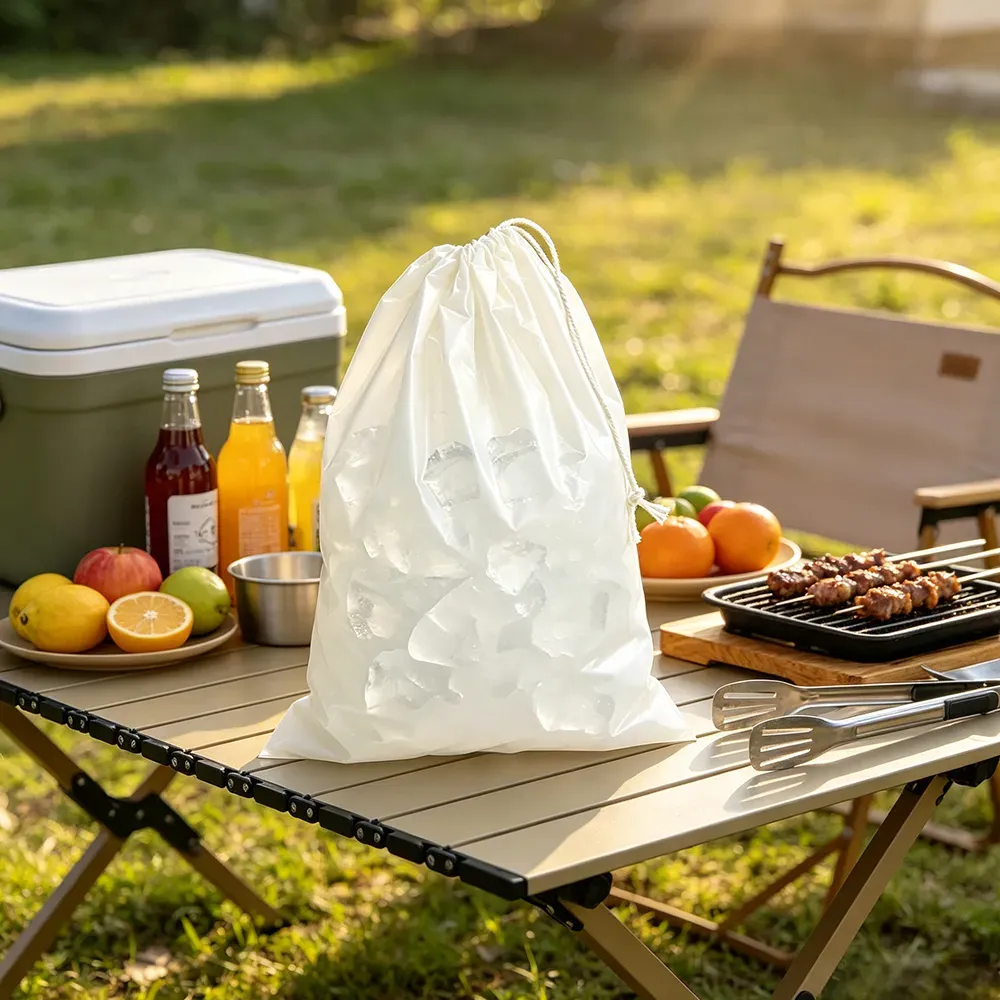
Although these two terms are often used interchangeably, they describe different environmental characteristics.
Biodegradable ice bags are designed to break down naturally over time through the action of microorganisms. The degradation rate depends on environmental factors such as temperature, humidity, oxygen, and microbial activity.
Compostable ice bags are manufactured to decompose completely under controlled composting conditions within a specified time period, leaving no toxic residues. Certified compostable bags typically comply with standards such as ASTM D6400 or EN 13432.
The major differences include:
| Feature | Biodegradable Ice Bags | Compostable Ice Bags |
|---|---|---|
| Breakdown process | Natural biological degradation | Controlled composting |
| Decomposition speed | Varies by environment | Faster under composting conditions |
| Certification | May or may not require certification | Usually certified |
| End products | Biomass, water, CO₂ | Biomass, water, CO₂ without harmful residue |
| Disposal | Landfill or industrial composting depending on material | Industrial composting preferred |
Understanding these differences helps buyers select the most appropriate packaging for their sustainability goals.
Using Biodegradable Ice Bags For Storage And Packaging
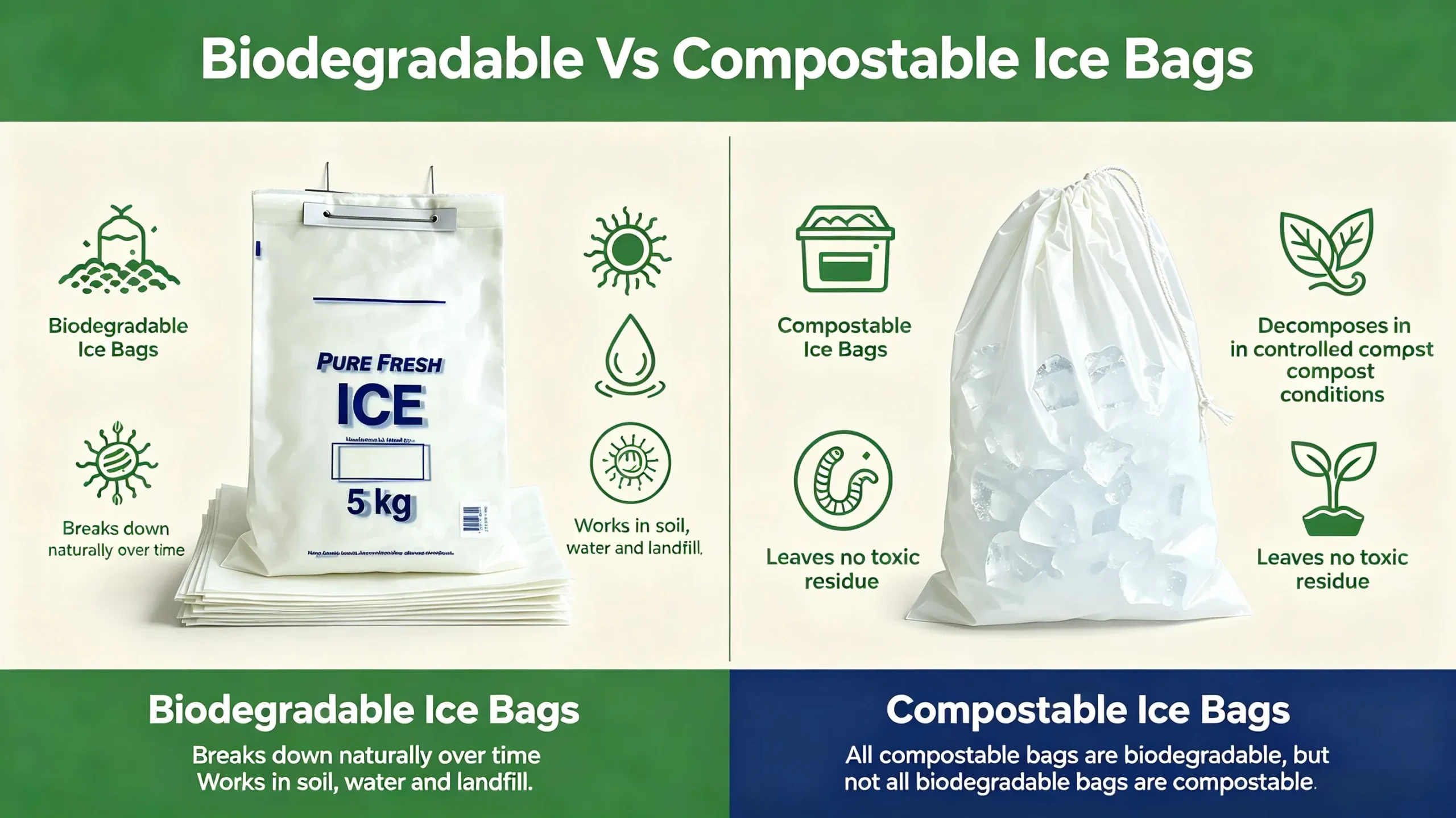
Biodegradable ice bags are suitable for a wide range of cold-chain and retail applications.
Common uses include:
- Retail packaged ice
- Ice cube sales
- Crushed ice packaging
- Commercial ice plants
- Ice vending machines
- Fishing and seafood markets
- Camping supplies
- Outdoor events
- Beverage cooling
- Hotel and restaurant operations
- Supermarket frozen departments
Because these bags are designed for low-temperature environments, they maintain flexibility and strength even when filled with frozen ice.
Many manufacturers also offer custom printing to enhance brand recognition while promoting environmentally responsible packaging.
Composition: Biodegradable And Bio-Based Materials
Modern biodegradable ice bags combine advanced material technology with practical packaging performance.
Unlike conventional polyethylene bags, biodegradable versions incorporate renewable or biodegradable polymers that improve environmental sustainability.
The material formulation often balances:
- Mechanical strength
- Tear resistance
- Sealability
- Flexibility
- Moisture barrier
- Freezer durability
- Controlled biodegradation
Selecting the proper material blend ensures the bags remain reliable throughout storage, transportation, and retail display.
Common Materials Used In Biodegradable Ice Bags
Several biodegradable materials are commonly used in manufacturing.
PLA (Polylactic Acid)
Derived from renewable resources such as corn starch or sugarcane, PLA offers excellent transparency and is widely used in sustainable packaging.
PBAT (Polybutylene Adipate Terephthalate)
PBAT provides flexibility, toughness, and excellent elongation, making it suitable for frozen packaging applications.
Corn Starch Blends
Modified starch materials improve biodegradability while helping reduce reliance on petroleum-based plastics.
Bio-Based Polymers
These renewable materials partially or fully replace fossil-based plastics and contribute to lowering carbon emissions.
Compostable Polymer Blends
Many premium biodegradable ice bags use specially engineered compostable resin blends to meet international environmental standards.
Characteristics Of Biodegradable Ice Bags
High-quality biodegradable ice bags provide performance comparable to conventional plastic packaging.
Key characteristics include:
- Excellent low-temperature performance
- Strong puncture resistance
- Leak-resistant seals
- High tensile strength
- Good flexibility
- Moisture resistance
- Food-contact safety
- Printable surface
- Lightweight construction
- Available in multiple sizes
- Suitable for automatic bag-making equipment
- Environmentally friendly materials
These characteristics make biodegradable ice bags suitable for demanding commercial packaging environments.
Advantages Of Biodegradable Ice Bags
Switching to biodegradable ice bags offers numerous benefits.
Reduced Environmental Impact
They help reduce long-term plastic pollution by using materials designed for biodegradation.
Improved Brand Image
Eco-friendly packaging demonstrates a company’s commitment to sustainability and appeals to environmentally conscious consumers.
Compliance With Environmental Regulations
Many regions continue introducing regulations limiting conventional single-use plastics. Biodegradable packaging helps businesses prepare for evolving market requirements.
Excellent Packaging Performance
Modern biodegradable materials provide strength, flexibility, and sealing performance similar to traditional plastic bags.
Custom Branding Opportunities
Manufacturers can customize:
- Logo printing
- Colors
- Bag dimensions
- Thickness
- Vent holes
- Handle styles
- Warning labels
- Barcode printing
How To Use Biodegradable Ice Bags Effectively
Proper handling helps maximize product performance.
Recommended practices include:
- Fill bags with clean food-grade ice.
- Avoid overfilling to prevent excessive pressure.
- Seal bags securely using heat sealing or tie closures if required.
- Store filled bags immediately in freezer conditions.
- Avoid exposure to sharp objects during transportation.
- Stack cartons properly to prevent punctures.
- Rotate inventory using the first-in, first-out (FIFO) method.
Following these guidelines improves packaging efficiency and reduces product damage.
Storage Method
Unused biodegradable ice bags should be stored carefully to preserve material quality.
Recommended storage conditions include:
- Store in a cool, dry environment.
- Keep away from direct sunlight.
- Avoid excessive heat and humidity.
- Maintain original packaging until use.
- Keep away from chemicals and solvents.
- Avoid prolonged exposure to UV light.
Proper storage helps maintain strength and extends shelf life.
How To Dispose Of Biodegradable Ice Bags
Correct disposal depends on the material used.
Recommended options include:
- Follow local waste disposal regulations.
- Separate biodegradable packaging from recyclable plastics if required.
- Industrial composting when applicable.
- Dispose of food residues before discarding the bag.
- Do not litter in natural environments.
Some biodegradable materials require specific composting conditions to achieve optimal decomposition, so always verify disposal recommendations with the manufacturer.
Choosing Biodegradable Ice Bags
Selecting the right biodegradable ice bag depends on your application.
Important factors include:
Bag Size
Choose a size appropriate for your ice volume, such as 2 lb, 5 lb, 8 lb, 10 lb, or larger commercial capacities.
Thickness
Thicker bags generally provide better puncture resistance and durability.
Material Type
Consider whether biodegradable or certified compostable materials best match your environmental objectives.
Printing Requirements
Custom printed ice bags improve product visibility and strengthen brand identity.
Food Safety Compliance
Ensure materials comply with applicable food-contact regulations for your target market.
Manufacturing Quality
Look for suppliers with advanced production equipment, strict quality control systems, and experience in frozen packaging.
Customization Capabilities
A professional manufacturer should provide flexible options for:
- Size
- Thickness
- Printing
- Color
- Packaging
- OEM and private label production
Choosing a reliable supplier ensures consistent product quality and dependable delivery.
Conclusion
As sustainability becomes increasingly important across the packaging industry, biodegradable ice bags provide an excellent solution for businesses seeking to reduce plastic waste while maintaining reliable packaging performance.
Modern biodegradable materials offer outstanding strength, freezer durability, moisture resistance, and printing quality, making them suitable for retail ice packaging, food service, supermarkets, hotels, and commercial ice production.
By selecting high-quality biodegradable ice bags from an experienced manufacturer, businesses can improve their environmental footprint, strengthen their brand image, and meet the growing demand for eco-friendly packaging solutions.
FAQ
Are biodegradable ice bags really biodegradable?
Yes. They are manufactured using biodegradable materials that can break down through natural biological processes under appropriate environmental conditions. The actual degradation time depends on the material formulation and disposal environment.
What is the difference between biodegradable and compostable ice bags?
Biodegradable bags naturally decompose over time, while compostable bags are designed to completely break down under controlled composting conditions and usually meet recognized compostability standards.
Are biodegradable ice bags safe for food contact?
High-quality biodegradable ice bags can be produced using food-grade materials that comply with applicable food-contact regulations. Always confirm certifications with the manufacturer before use.
Can biodegradable ice bags be recycled?
Most biodegradable materials should not be mixed with conventional plastic recycling streams. Follow local waste management guidelines or the manufacturer’s disposal recommendations.
How long do biodegradable ice bags take to decompose?
Decomposition time varies depending on the material type, temperature, humidity, oxygen availability, and microbial activity. Under suitable conditions, biodegradable materials generally break down much faster than conventional plastics.
Are biodegradable ice bags as strong as traditional plastic bags?
Yes. Modern biodegradable resin formulations offer excellent puncture resistance, seal strength, flexibility, and low-temperature performance, making them suitable for commercial ice packaging.
Can biodegradable ice bags be customized?
Absolutely. Manufacturers commonly offer custom sizes, thicknesses, colors, logos, high-quality printing, vent holes, and private-label (OEM) production.
What industries commonly use biodegradable ice bags?
They are widely used in supermarkets, convenience stores, commercial ice plants, restaurants, hotels, seafood suppliers, food processing facilities, beverage distributors, and outdoor recreation businesses.
How should biodegradable ice bags be stored?
Store unused bags in a cool, dry place away from direct sunlight, excessive heat, and high humidity to maintain their strength and extend shelf life.
Why are biodegradable ice bags becoming more popular?
Increasing environmental awareness, stricter regulations on single-use plastics, and growing consumer demand for sustainable packaging have made biodegradable ice bags a preferred choice for businesses seeking eco-friendly packaging solutions.