Product Overview
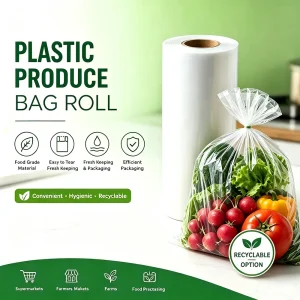
Produce bags on a roll are lightweight plastic bags designed for supermarkets, grocery stores, fresh produce departments, farmers’ markets, and food retailers. These bags are connected on a perforated roll, allowing customers or store employees to tear off individual bags quickly when selecting fruits, vegetables, herbs, and other fresh products.
For supermarkets, produce bags on a roll provide a practical packaging solution that combines convenience, hygiene, flexibility, and cost efficiency. Depending on the application, they can be manufactured in different sizes, thicknesses, materials, and formats to meet specific retail requirements.
Key Takeaways
- Produce bags on a roll are convenient for packing fruits and vegetables.
- Perforated rolls allow individual bags to be separated quickly.
- Lightweight materials help reduce packaging costs.
- They provide a hygienic barrier between fresh produce and external contaminants.
- Different sizes and thicknesses can be customized for different products.
- Produce bags on a roll can be made from traditional or recycled plastic materials.
- Custom printing and packaging options are available for retail businesses.
- They are widely used in supermarkets, grocery stores, markets, and produce departments.
Produce Bags on a Roll: Context and History
Plastic produce bags became increasingly common as supermarkets developed self-service fresh produce departments. Before modern retail packaging became widespread, customers often selected fruits and vegetables individually and carried them without protective packaging or used paper-based alternatives.
The introduction of produce bags on a roll made fresh produce handling faster and more convenient. Instead of providing individual loose bags, retailers could place a roll of connected bags near the produce section. Customers simply pull the next bag and tear it along the perforation.
Today, produce bags on a roll remain a common packaging format because they require little storage space, are easy to dispense, and can accommodate many different types of fresh produce.
What Are Produce Bags on a Roll?
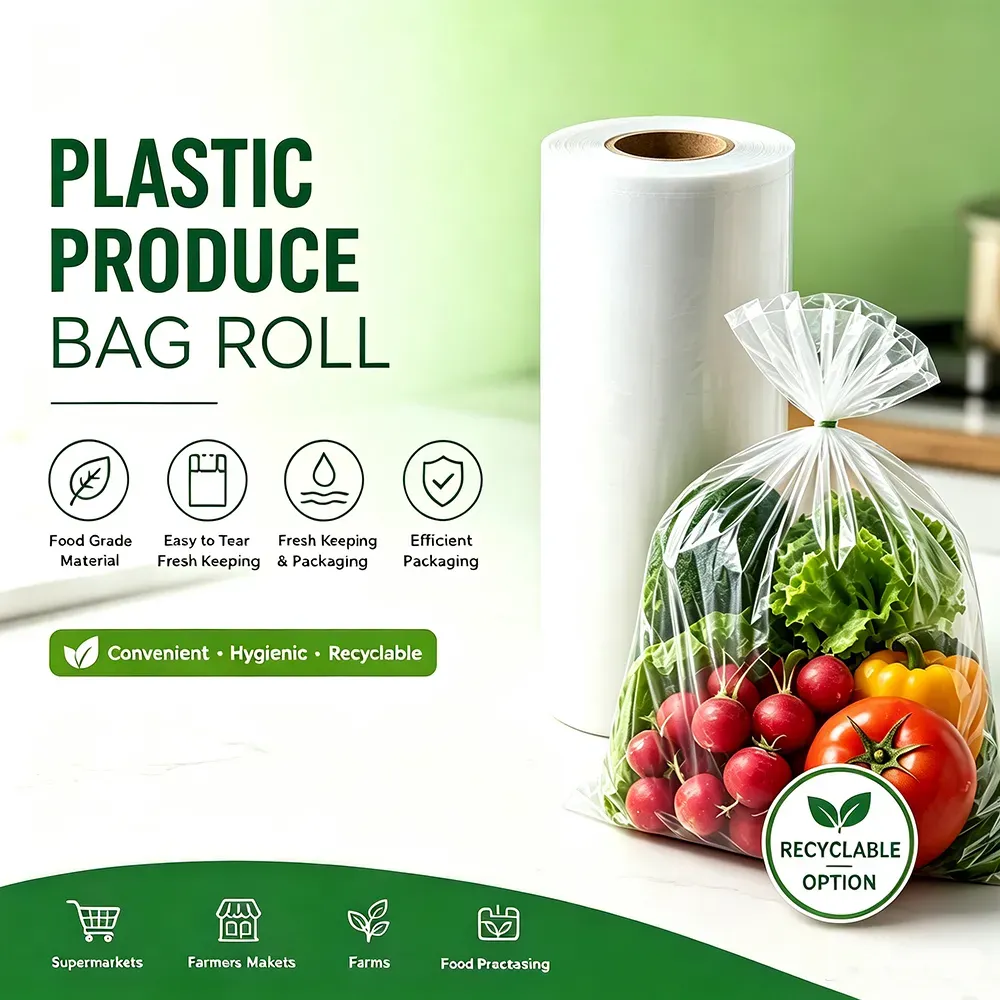
Produce bags on a roll are a series of individual plastic bags joined together by perforated sections. Each bag can be separated from the roll when needed.
The bags are generally transparent or translucent so customers can easily see the contents. Depending on the intended application, manufacturers can produce them from materials such as LDPE, HDPE, or other polyethylene-based materials.
The design can also include features such as easy-tear perforations, reinforced sections, different bag dimensions, and custom thicknesses. These features make produce bags on a roll suitable for different fruits, vegetables, and grocery products.
Why Are Produce Bags on a Roll Important in Food Packaging?
Fresh fruits and vegetables can be exposed to dirt, moisture, handling, and other external contaminants during transportation and retail display. Using produce bags on a roll provides an additional layer of protection during shopping and handling.
For supermarkets, these bags also improve the customer experience. Shoppers can easily place loose vegetables, fruits, herbs, and other products into a bag before weighing or purchasing them.
Another important advantage is operational efficiency. Because produce bags on a roll are connected and perforated, employees can quickly provide or refill bags at produce stations without organizing individual loose bags.
Biodegradable vs. Compostable Produce Bags
Biodegradable and compostable are not interchangeable terms.
Biodegradable plastic refers to materials that can break down through biological processes under suitable environmental conditions. The speed and conditions required for biodegradation can vary significantly depending on the material.
Compostable bags are designed to break down under specified composting conditions and should meet relevant compostability requirements where applicable.
When supermarkets are considering environmentally oriented produce bags on a roll, buyers should evaluate the actual material composition, applicable certifications, disposal conditions, and local regulations rather than relying only on environmental marketing claims.
Using Produce Bags on a Roll for Storage and Packaging
Produce bags on a roll are mainly designed for short-term handling and packaging of fresh products rather than long-term storage of every type of food.
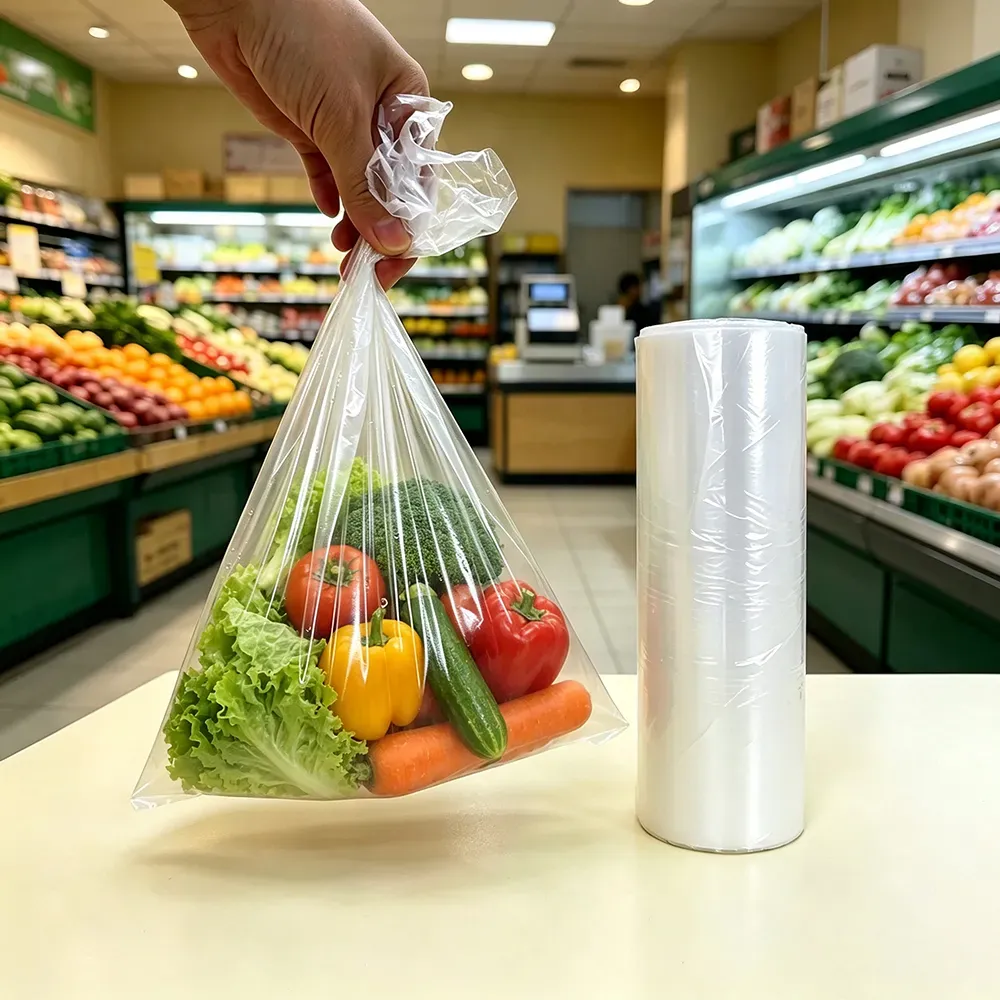
In supermarkets, customers commonly use them for apples, oranges, potatoes, carrots, onions, leafy vegetables, mushrooms, herbs, and other loose produce.
For certain products, the bag can help contain moisture, prevent direct contact between products, and make transportation from the store to the customer’s home more convenient.
However, the appropriate material and thickness should always be selected according to the product’s weight, moisture level, storage conditions, and intended use.
Composition: Plastic and Recycled Materials
The composition of produce bags on a roll depends on the manufacturer’s design and the buyer’s requirements.
Common polyethylene materials include LDPE and HDPE. LDPE offers good flexibility and softness, while HDPE generally provides higher stiffness and strength at relatively low thicknesses.
Some buyers may also request recycled content or other more sustainable material solutions. The appropriate choice depends on the intended application, local regulations, food-contact requirements, and the supermarket’s sustainability objectives.
For food-contact applications, buyers should request appropriate compliance documentation and testing based on the destination market.
Common Materials Used in Produce Bags on a Roll
LDPE
LDPE is widely used because it provides flexibility, softness, transparency, and good tear resistance. It is suitable for many lightweight fruits and vegetables.
HDPE
HDPE offers a relatively high strength-to-weight ratio and a slightly stiffer feel. It can be used for lightweight produce packaging where strength and material efficiency are important.
Recycled Materials
Recycled polyethylene may be considered for applications where regulations and food-contact requirements allow it. The percentage of recycled content can be customized according to the project.
Biodegradable or Compostable Materials
For supermarkets seeking alternative packaging solutions, biodegradable or compostable materials may be available. Buyers should confirm the relevant certification and disposal requirements before selecting these materials.
Characteristics of Produce Bags on a Roll
The main characteristics of produce bags on a roll include:
- Lightweight construction
- Transparent or translucent appearance
- Easy-tear perforation
- Flexible material
- Convenient roll format
- Multiple sizes available
- Different thickness options
- Good moisture resistance
- Easy dispensing
- Space-efficient storage
These characteristics make produce bags on a roll particularly suitable for high-volume supermarket environments.
Advantages of Produce Bags on a Roll
1. Convenient for Customers
Customers can quickly pull a bag from the roll, open it, and place fresh produce inside. This makes shopping more convenient and efficient.
2. Easy to Dispense
The perforated roll design allows one bag to be separated at a time. Supermarket employees can easily install new rolls at produce stations.
3. Cost Efficient
Because the bags are lightweight and can be produced using relatively thin plastic film, they can provide an economical packaging solution for high-volume retail operations.
4. Hygienic Handling
Using individual bags helps reduce direct contact between fresh produce and hands, shopping carts, counters, and other surfaces during transportation and shopping.
5. Flexible Applications
Different sizes and thicknesses can be selected for small fruits, large vegetables, leafy greens, herbs, and other grocery products.
6. Efficient Storage
A roll containing many individual bags occupies less storage space than the same number of loose bags, making inventory management easier for supermarkets.
7. Customizable
Manufacturers can customize bag size, thickness, material, perforation, printing, packaging, and roll specifications according to customer requirements.
Application Scenarios for Produce Bags on a Roll
Produce bags on a roll are commonly used in:
- Supermarkets
- Grocery stores
- Fresh produce departments
- Farmers’ markets
- Fruit and vegetable shops
- Food retailers
- Convenience stores
- Wholesale produce markets
- Food distribution centers
- Agricultural product retailers
They can package products such as apples, pears, oranges, potatoes, carrots, onions, peppers, cucumbers, mushrooms, lettuce, spinach, herbs, and other fresh produce.
How to Use Produce Bags on a Roll Effectively
To use produce bags on a roll effectively, retailers should place the rolls in convenient locations near the fresh produce section.
The dispensing point should allow customers to pull and tear individual bags without difficulty. Stores should also keep replacement rolls available to avoid interruptions during busy shopping periods.
When selecting produce bags on a roll, consider the size and weight of the products. Smaller bags may be suitable for herbs and small fruits, while larger and stronger bags are more appropriate for heavier vegetables.
The bag thickness should also be matched with the application. Using unnecessarily thick bags may increase material consumption and cost, while bags that are too thin may not provide sufficient strength.
Storage Method
Proper storage helps maintain the quality of produce bags on a roll before use.
Store the rolls in a clean, dry environment away from direct sunlight, excessive heat, moisture, and sharp objects. Keep them in their original packaging until they are ready for use.
For commercial buyers, rolls should preferably be stored in an organized inventory system so that different sizes and specifications can be identified easily.
How to Dispose of Produce Bags on a Roll
The correct disposal method depends on the material and local waste-management system.
Traditional polyethylene produce bags may be recyclable in locations where suitable plastic-film recycling programs are available. However, consumers should follow local recycling instructions because not every recycling facility accepts flexible plastic bags.
If biodegradable or compostable produce bags on a roll are used, the disposal method should follow the manufacturer’s certification and instructions. A bag should not automatically be placed in a composting system simply because it is described as biodegradable.
Supermarkets should provide accurate disposal information when environmental claims are part of their packaging strategy.
Choosing Produce Bags on a Roll
When purchasing produce bags on a roll, supermarkets and distributors should evaluate several factors.
Material
Choose LDPE, HDPE, recycled, biodegradable, or compostable materials according to the application and regulatory requirements.
Size
Select bag dimensions according to the size and quantity of produce customers normally purchase.
Thickness
Consider product weight, sharp edges, moisture, and handling conditions when selecting film thickness.
Roll Format
Check the number of bags per roll, perforation quality, roll dimensions, and compatibility with existing dispensers.
Food-Contact Compliance
For food packaging applications, request relevant food-contact documentation and testing according to the target market.
Customization
For retailers requiring branded packaging, manufacturers may offer custom printing, bag dimensions, material specifications, packaging, and roll configurations.
MOQ
The minimum order quantity depends on the material, size, printing requirements, and customization. For wholesale production, a typical starting MOQ can be 100 kg, while the exact quantity should be confirmed according to the project specifications.
Conclusion
So, why do supermarkets use produce bags on a roll? The main reasons are convenience, hygiene, efficiency, flexibility, and cost control.
Produce bags on a roll allow customers to package fresh fruits and vegetables quickly while helping supermarkets maintain an organized and efficient produce section. Their perforated roll format makes dispensing simple, while different materials, sizes, and thicknesses allow retailers to select packaging according to their specific requirements.
For supermarkets and grocery businesses purchasing in bulk, choosing the right produce bags on a roll involves more than simply comparing prices. Material quality, bag dimensions, thickness, roll configuration, food-contact compliance, customization, and sustainability requirements should all be considered.
Working with an experienced produce bag manufacturer can help buyers develop a packaging solution that matches their products, retail environment, and target market.
FAQ
1. Why do supermarkets use produce bags on a roll?
Supermarkets use produce bags on a roll because they are convenient, hygienic, lightweight, space-efficient, and easy for customers to tear and use when purchasing fresh fruits and vegetables.
2. What are produce bags on a roll made from?
Produce bags on a roll are commonly made from polyethylene materials such as LDPE or HDPE. Depending on the application, recycled, biodegradable, or compostable materials may also be available.
3. Are produce bags on a roll food safe?
They can be designed for food-contact applications when manufactured from appropriate materials and produced according to applicable food-contact requirements. Buyers should request relevant compliance documentation from the manufacturer.
4. What sizes of produce bags on a roll are available?
Sizes can vary according to the intended application. Small bags may be used for herbs and small fruits, while larger bags can accommodate heavier vegetables and multiple products.
5. Can produce bags on a roll be customized?
Yes. Manufacturers can typically customize dimensions, thickness, material, perforation, roll length, packaging, and printing according to the buyer’s requirements.
6. Are produce bags on a roll recyclable?
Many polyethylene produce bags can be recyclable where suitable plastic-film recycling programs exist. However, recycling availability depends on local waste-management systems.
7. Can supermarkets order custom printed produce bags on a roll?
Yes. Custom printing can be used for branding, product information, promotional messages, or other retail requirements, depending on the bag material and printing process.
8. What is the MOQ for produce bags on a roll?
The MOQ depends on the material, size, thickness, printing, and customization requirements. For many customized wholesale projects, the starting MOQ can be around 100 kg.
9. Are produce bags on a roll suitable for wet vegetables?
Yes, suitable plastic materials can provide moisture resistance and can be used for many wet or high-moisture fruits and vegetables. The material and thickness should be selected according to the specific product.
10. How should buyers choose a produce bags on a roll manufacturer?
Buyers should evaluate the manufacturer’s production capabilities, material options, quality control, food-contact compliance, customization capabilities, MOQ, lead time, and export experience before placing an order.