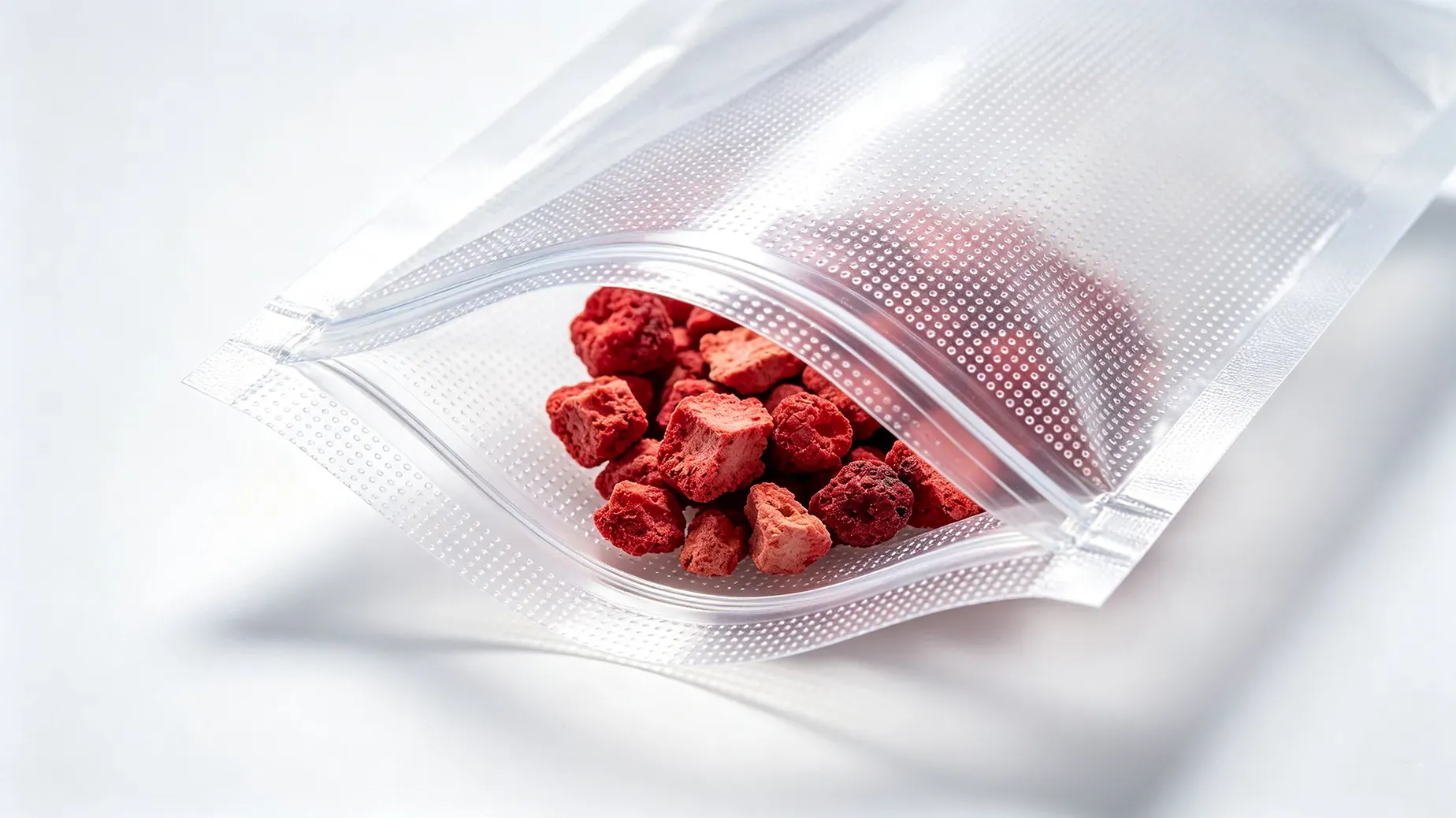
Perforated Plastic Bags are breathable plastic packaging solutions designed with evenly distributed holes or micro perforations to improve airflow and moisture control. Unlike traditional sealed plastic bags, perforated bags allow oxygen exchange and release excess moisture, helping maintain product freshness and quality during storage, transportation, and display.
Made from high-quality materials such as LDPE, HDPE, BOPP, CPP, and biodegradable polymers, perforated plastic bags are widely used for fresh produce, vegetables, fruits, bakery products, agricultural products, and industrial packaging. The perforation size, pattern, bag thickness, and structure can be customized according to different product requirements.
With excellent breathability, lightweight design, transparency, and customizable options, perforated plastic bags provide an efficient and cost-effective packaging solution for businesses requiring ventilation and product protection.
Key Takeaways
- Perforated plastic bags are designed with tiny holes that allow air circulation and moisture control.
- They are widely used for fresh produce, bakery products, food packaging, agricultural products, and industrial applications.
- Common materials include LDPE, HDPE, BOPP, and CPP, depending on the required strength, transparency, and breathability.
- Perforation technology helps extend product freshness by reducing condensation and controlling gas exchange.
- Custom sizes, thicknesses, printing, and perforation patterns are available for different packaging requirements.
- Choosing the right perforated plastic bag depends on product type, storage conditions, transportation methods, and shelf-life requirements.
Perforated Plastic Bags: Context And History
Plastic packaging has continuously evolved to meet the increasing demands of food safety, product protection, and supply chain efficiency. Traditional plastic bags provide excellent protection against moisture and contamination but often create a sealed environment where condensation can accumulate, especially when packaging fresh fruits, vegetables, bread, and agricultural products.
To solve this problem, perforated plastic bags were developed. By adding controlled micro holes or ventilation openings to plastic films, manufacturers created packaging solutions that balance protection and breathability.
Today, perforated plastic bags are widely used across global food supply chains, supermarkets, farms, bakeries, and industrial sectors. They have become an important packaging choice for products that require airflow, moisture regulation, and extended freshness.
What Are Perforated Plastic Bags?
Perforated plastic bags are plastic packaging bags with evenly distributed holes or micro perforations on the film surface. These small openings allow air, oxygen, and moisture vapor to pass through while still providing protection from dust, handling damage, and external contamination.
Unlike ordinary sealed plastic bags, perforated bags create a breathable packaging environment. This makes them especially suitable for products that continue to release moisture or require ventilation during storage.
Depending on the application, perforations can be customized in different ways:
- Micro perforations for fresh produce and food packaging
- Larger ventilation holes for agricultural packaging
- Laser perforations for precise airflow control
- Mechanical punched holes for industrial applications
Perforated plastic bags can also be produced in various styles, including:
- Flat bags
- Gusset bags
- Side seal bags
- Wicket bags
- Roll bags
- Pre-opened bags
- Header bags
 |  |
Perforated Plastic Bags Vs Regular Plastic Bags
Although both types are made from plastic film materials, perforated and regular plastic bags serve different purposes.
| Feature | Perforated Plastic Bags | Regular Plastic Bags |
|---|---|---|
| Air circulation | Excellent ventilation | Limited airflow |
| Moisture control | Reduces condensation | May trap moisture |
| Freshness preservation | Helps maintain product quality | Suitable for dry products |
| Applications | Produce, bakery, agriculture | General packaging |
| Shelf life support | Improves freshness of some products | Mainly provides protection |
Perforated plastic bags are the preferred solution when products need breathing space rather than complete sealing.
Using Perforated Plastic Bags For Storage And Packaging
Perforated plastic bags are widely used in different industries because they provide both protection and ventilation.
Fresh Produce Packaging
Fresh fruits and vegetables are among the most common applications.
Examples include:
- Lettuce
- Spinach
- Broccoli
- Carrots
- Potatoes
- Onions
- Mushrooms
- Fresh herbs
The perforations allow excess moisture to escape, helping reduce mold growth and maintain freshness during transportation and retail display.
Bakery Packaging
Bread and bakery products require packaging that prevents contamination while avoiding excessive moisture buildup.
Perforated bags are commonly used for:
- Bread
- Buns
- Rolls
- Pastries
- Cakes
The breathable structure helps maintain texture and prevents products from becoming too soft.
Agricultural Packaging
Farmers and distributors use perforated bags for:
- Seed packaging
- Flower packaging
- Nursery products
- Agricultural supplies
The ventilation design supports better storage conditions during transportation.
Industrial Applications
Perforated plastic bags are also used for:
- Hardware components
- Electronic parts
- Small industrial products
- Textile accessories
They provide visibility and protection while allowing airflow.
Composition: Biodegradable And Bio-Based Materials
Perforated plastic bags can be produced using different materials according to application requirements.
Manufacturers select materials based on:
- Strength requirements
- Transparency
- Temperature resistance
- Food contact standards
- Environmental requirements
Common Materials Used In Perforated Plastic Bags
LDPE (Low-Density Polyethylene)
LDPE is one of the most popular materials for perforated bags.
Advantages:
- Soft and flexible
- Excellent impact resistance
- Good transparency
- Suitable for food packaging
Common applications:
- Vegetable bags
- Bread bags
- Produce packaging
HDPE (High-Density Polyethylene)
HDPE provides higher stiffness and strength compared with LDPE.
Advantages:
- Strong load capacity
- Good moisture resistance
- Cost-effective
Common applications:
- Agricultural bags
- Industrial packaging
BOPP (Biaxially Oriented Polypropylene)
BOPP is commonly used when high clarity and premium appearance are required.
Advantages:
- Excellent transparency
- Good printability
- High stiffness
Applications:
- Bakery packaging
- Retail food packaging
CPP (Cast Polypropylene)
CPP offers softness and excellent sealing performance.
Advantages:
- High clarity
- Good flexibility
- Heat resistance
Applications:
- Food packaging
- Specialty packaging solutions
Compostable And Biodegradable Materials
For sustainable packaging requirements, perforated bags can also be produced using:
- PLA
- PBAT
- Starch-based materials
- Bio-based polymers
These materials help reduce dependence on traditional fossil-based plastics.
Characteristics Of Perforated Plastic Bags
1. Excellent Breathability
The biggest advantage of perforated bags is controlled airflow. The holes allow oxygen exchange and moisture release.
2. Moisture Control
Perforations reduce condensation inside the package, helping protect moisture-sensitive products.
3. Product Visibility
Many perforated bags use transparent films, allowing customers to clearly see the packaged products.
4. Lightweight Design
Plastic perforated bags reduce packaging weight compared with boxes or rigid containers.
5. Flexible Packaging Options
They can be customized with:
- Different sizes
- Various thicknesses
- Custom printing
- Different hole patterns
- Different sealing methods
6. Food-Safe Performance
Food-grade materials can meet international food packaging requirements.
Advantages Of Perforated Plastic Bags
Extends Product Freshness
Proper ventilation helps maintain better storage conditions for fresh products.
Reduces Packaging Waste
Lightweight plastic bags require fewer resources compared with traditional packaging materials.
Improves Transportation Efficiency
The lightweight structure reduces shipping weight and storage space.
Enhances Retail Presentation
Transparent packaging allows attractive product displays.
Supports Custom Branding
Manufacturers can provide:
- Logo printing
- Customized colors
- Special packaging designs
Cost-Effective Packaging Solution
Perforated plastic bags provide excellent performance at competitive costs, making them suitable for large-scale commercial packaging.
How To Use Perforated Plastic Bags Effectively
1. Select The Correct Bag Size
Choose the appropriate dimensions according to the product volume.
Common considerations:
- Product weight
- Product shape
- Required ventilation area
- Packaging equipment compatibility
2. Match The Correct Perforation Design
Different products require different ventilation levels.
Examples:
- Fresh vegetables → micro perforations
- Large agricultural products → larger holes
- Bakery products → controlled ventilation
3. Avoid Overfilling
Overfilled bags may reduce airflow efficiency and damage products.
Leave enough space inside the bag to maintain ventilation.
Storage Method
Proper storage helps maintain the quality of perforated plastic bags.
Recommended storage conditions:
- Keep bags in a dry environment
- Avoid direct sunlight exposure
- Store away from heat sources
- Prevent sharp objects from damaging the film
For food packaging applications, bags should remain clean and protected before use.
How To Dispose Of Perforated Plastic Bags
Disposal methods depend on the material type.
Traditional Plastic Bags
LDPE and HDPE bags can often be recycled through appropriate recycling programs.
Biodegradable Perforated Bags
Bags made from compostable materials should be disposed of according to local composting guidelines.
Recommended practices:
- Separate from other waste
- Follow local recycling regulations
- Use industrial composting facilities when applicable
Choosing Perforated Plastic Bags
When selecting perforated plastic bags, consider the following factors:
Material Selection
Choose materials based on:
- Product requirements
- Strength needs
- Food safety standards
- Environmental goals
Thickness
Common thickness ranges:
- Light-duty packaging: 20-40 microns
- Medium-duty packaging: 40-70 microns
- Heavy-duty packaging: 70+ microns
Perforation Type
Options include:
- Micro perforation
- Laser perforation
- Mechanical perforation
Bag Style
Available options:
- Flat bags
- Gusset bags
- Roll bags
- Wicket bags
- Custom-shaped bags
Printing Requirements
Custom printing options include:
- Brand logo
- Product information
- Instructions
- Marketing graphics
Conclusion
Perforated plastic bags provide an effective packaging solution for products that require ventilation, moisture control, and protection. Their unique breathable structure makes them ideal for fresh produce, bakery items, agricultural products, and various industrial applications.
With customizable materials, sizes, thicknesses, and perforation designs, perforated plastic bags can meet the packaging requirements of different industries. For businesses looking for reliable, efficient, and cost-effective packaging solutions, perforated bags offer a practical choice that improves product quality and supply chain performance.
FAQ
1. What are perforated plastic bags used for?
Perforated plastic bags are mainly used for fresh produce, vegetables, bakery products, agricultural products, and industrial items that require airflow.
2. What materials are perforated plastic bags made from?
Common materials include LDPE, HDPE, BOPP, CPP, and biodegradable polymers such as PLA and PBAT.
3. Do perforated plastic bags extend food shelf life?
Perforated bags can help maintain freshness by controlling moisture and improving airflow, especially for fresh fruits and vegetables.
4. Can perforated plastic bags be customized?
Yes. Manufacturers can customize size, thickness, perforation pattern, printing, color, and bag style according to customer requirements.
5. Are perforated plastic bags recyclable?
Many perforated plastic bags made from PE materials are recyclable. Recycling depends on local facilities and regulations.
6. What is the difference between micro perforated bags and regular perforated bags?
Micro perforated bags contain very small holes designed for precise airflow control, while regular perforated bags usually have larger ventilation openings.