Biodegradable ziplock bags are resealable storage bags designed to break down faster than conventional plastic bags under the right environmental conditions.
You can use them for food storage, household organization, retail packaging, and e-commerce fulfillment when you need a lower-impact alternative to single-use plastic bags.
The best options are made from certified biodegradable or compostable materials such as PLA, PBAT, PHA, or starch blends, and they should meet recognized standards such as ASTM D6400 or EN 13432 when compostability is claimed.
Key Takeaways
- Biodegradable ziplock bags are designed to break down through natural biological processes under suitable conditions.
- Compostable ziplock bags are a more specific category and should meet standards such as ASTM D6400 or EN 13432.
- Common materials include PLA, PBAT, PHA, and starch-based blends.
- These bags are useful for food storage, home organization, retail packaging, and e-commerce packaging.
- Proper storage and disposal matter because heat, moisture, and incorrect waste streams can reduce their environmental benefit.
Biodegradable Ziplock Bags: Context And History
Biodegradable ziplock bags developed because conventional plastic storage bags solved a daily convenience problem but created a long-term waste problem. Traditional resealable plastic bags are lightweight, clear, low-cost, and effective for keeping food and small items organized.
Plastic ziplock bags became standard in kitchens, warehouses, travel kits, offices, schools, and retail packaging. Their airtight closure helped preserve food freshness, reduce spills, and separate small items. That convenience made them difficult to replace, especially for consumers and businesses that needed packaging that was simple, flexible, and inexpensive.
The environmental cost became harder to ignore as plastic waste increased. Conventional plastic bags often end up in landfills or escape into oceans and rivers, where they can fragment into microplastics. These fragments can affect soil, water, wildlife, and food systems. Biodegradable ziplock bags entered the market as a practical response: keep the useful resealable format, but reduce the long-term burden of persistent plastic waste.
Many regions are restricting single-use plastics, while buyers increasingly expect brands to use environmentally friendly packaging.
What Are Biodegradable Ziplock Bags?
Biodegradable ziplock bags are resealable bags made from materials that can be broken down by microorganisms, moisture, oxygen, heat, or sunlight under suitable conditions. Their purpose is to provide storage and packaging convenience while reducing the long-term persistence associated with conventional plastic bags. They are commonly used for food, household items, retail products, samples, accessories, and small components.
The word “biodegradable” means the material can decompose through biological activity. However, it does not always define how fast the bag will break down or what conditions are required. This is why certification matters. A vague biodegradable claim is less useful than a verified standard that explains whether the bag can break down safely in a composting environment.
Biodegradable Vs Compostable Ziplock Bags
All compostable ziplock bags are biodegradable, but not all biodegradable ziplock bags are compostable. Compostable bags must break down into non-toxic components within a defined period under composting conditions, while biodegradable bags may require different environments and longer timelines.
| Feature | Biodegradable Ziplock Bags | Compostable Ziplock Bags |
|---|---|---|
| Basic meaning | Break down through biological processes | Break down into compost under controlled conditions |
| Timeframe | May vary by material and environment | Usually defined by certification standards |
| Standards | Not always certified | Often certified to ASTM D6400, EN 13432, or similar |
| Disposal route | Depends on local waste rules | Industrial composting or approved compost stream |
| Best for | Lower-impact storage and packaging | Certified composting programs and food-contact waste streams |
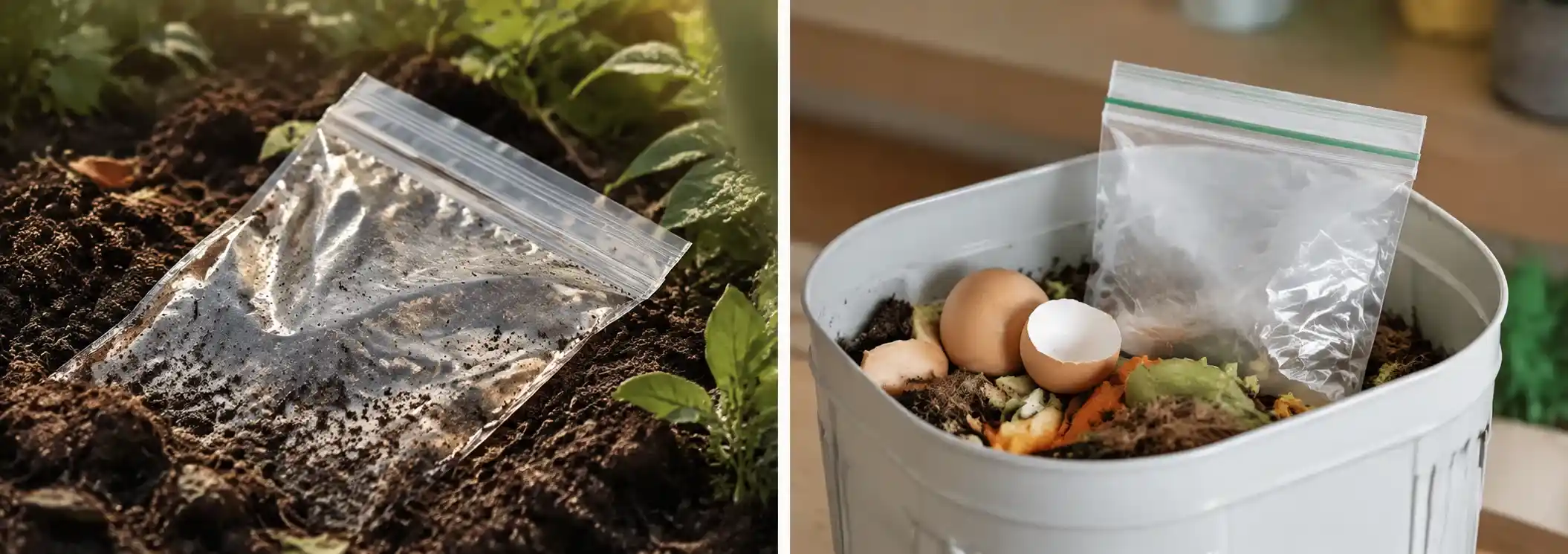
Using Biodegradable Ziplock Bags For Storage And Packaging
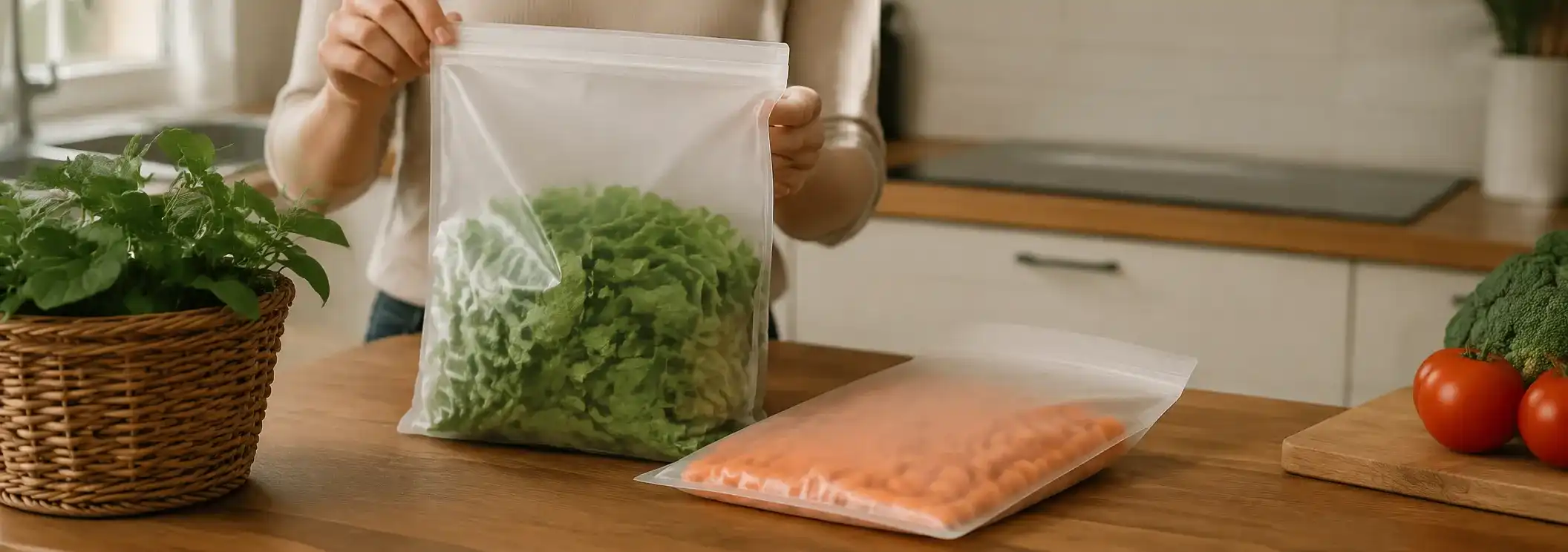
Biodegradable ziplock bags can replace conventional resealable bags in many short- and medium-term storage scenarios. You can use them for sandwiches, produce, snacks, dried goods, travel toiletries, small hardware, craft supplies, apparel accessories, product samples, and e-commerce inserts.
For food storage, high-quality biodegradable ziplock bags should be food-safe and suitable for direct contact with common foods. They help protect contents from dust, moisture loss, and handling contamination. Many households use them for packed lunches, refrigerator organization, dry snacks, and portion control.
For non-food packaging, these bags offer a practical way to organize and protect small items. Retailers use them for clothing accessories, jewelry components, stationery, electronics parts, cosmetics samples, and replacement parts.
A biodegradable resealable bag still feels intuitive to use, which makes adoption easier than packaging that requires a completely new handling process.
Composition: Biodegradable And Bio-Based Materials
Biodegradable ziplock bags are commonly made from plant-based polymers, fossil-based biodegradable polymers, or blended materials designed to balance strength, flexibility, and decomposition. The most common materials include PLA, PBAT, PHA, and starch blends. Each material affects the bag’s clarity, softness, sealing performance, durability, shelf life, and end-of-life behavior.
A key point is that bio-based does not always mean biodegradable. A material can come from renewable plant sources but still behave like conventional plastic after disposal. At the same time, some biodegradable polymers may include fossil-based components but still break down under specific conditions. For this reason, material origin and biodegradation performance should be evaluated separately.
Common Materials Used In Biodegradable Ziplock Bags
| Material | Source | Strength | Limitation |
|---|---|---|---|
| PLA | Corn starch, sugarcane, or other plant sugars | Good clarity and renewable content | Can be brittle without blending |
| PBAT | Fossil-based biodegradable polymer | Flexible and durable | Usually blended with bio-based materials |
| PHA | Produced by microorganisms | Strong biodegradation profile | Higher cost and limited supply |
| Starch blends | Corn, potato, cassava, or other starch sources | Cost-effective and flexible | Sensitive to moisture |
| PLA + PBAT blends | Plant-based and biodegradable polymer mix | Better balance of strength and flexibility | Needs proper composting conditions |
For zipper bags, material performance is especially important because the closure must open and reseal without tearing. This is why many biodegradable ziplock bags use blends rather than a single polymer. A well-designed blend can improve tensile strength, seal integrity, and shelf stability while still supporting a lower-impact packaging strategy.
Characteristics Of Biodegradable Ziplock Bags
Biodegradable ziplock bags are designed to offer resealable convenience, food or product protection, and reduced environmental persistence. Their main characteristics include biological breakdown potential, lightweight structure, flexible handling, and a zipper closure that allows repeated opening and closing. The best products balance sustainability with practical performance.
Compared with conventional plastic bags, biodegradable ziplock bags may be more sensitive to heat, humidity, sunlight, and long storage periods. That does not mean they are weak; it means they are engineered not to last forever.
Advantages Of Biodegradable Ziplock Bags
Biodegradable ziplock bags reduce dependence on conventional petroleum-based plastic while keeping the storage format people already know. They are useful because they support waste reduction goals without forcing households or businesses to give up resealable convenience. For many applications, this makes them one of the easiest sustainable packaging swaps.
The environmental advantage depends on material quality, certification, and disposal conditions. When bags are certified compostable and sent to the right composting facility, they can break down into natural components instead of remaining as long-term plastic waste. When used as part of a broader packaging reduction plan, they can help lower the volume of persistent single-use plastics entering landfills and natural environments.
How To Use Biodegradable Ziplock Bags Effectively
To get the best performance from biodegradable ziplock bags, store them in a cool, dry place away from direct sunlight, high heat, and excess moisture. Use older stock first because biodegradable materials usually have a shorter shelf life than conventional plastic. Do not treat them as permanent storage bags.
For food storage, check whether the bags are approved for food contact and whether they are suitable for refrigeration, freezing, or dry storage. Avoid using them with very hot foods unless the supplier confirms heat resistance. For retail or e-commerce, test the bag with your actual product before ordering in bulk, especially if the item has sharp edges, oils, powders, or high moisture content.
Storage Method
| Do | Avoid |
|---|---|
| Keep bags sealed in original cartons before use | Leaving bags in direct sunlight |
| Store in a dry warehouse or cabinet | Storing near heat sources |
| Use first-in, first-out inventory | Keeping stock for several years |
| Confirm food-contact approval for food use | Assuming all biodegradable bags are food-safe |
| Test with your actual product | Using one specification for every product |
| Add disposal instructions when selling products | Placing compostable bags in plastic recycling bins |
How To Dispose Of Biodegradable Ziplock Bags
Disposal depends on the bag’s certification and your local waste system. Certified compostable ziplock bags should go to an approved industrial composting facility or municipal green bin only if local rules accept them. Do not place biodegradable or compostable bags in standard plastic recycling bins because they can contaminate the recycling stream.
If composting is not available, disposal becomes less ideal. A biodegradable bag placed in a landfill may not break down efficiently because landfills often lack oxygen, moisture, and microbial activity. Even so, choosing a properly designed biodegradable option can still reduce reliance on virgin petroleum plastic, especially when paired with waste reduction and reuse habits.
Choosing Biodegradable Ziplock Bags
When choosing biodegradable ziplock bags for business packaging, start with the product use case, not the material name. A bag for fresh produce needs different properties than a bag for apparel accessories, cosmetics samples, frozen items, or hardware parts. Size, thickness, zipper strength, clarity, printability, and certification all affect the final result.
You should also consider how your customers will dispose of the packaging. If your buyers are in areas with industrial composting programs, certified compostable ziplock bags may be the strongest choice. If disposal systems are limited, a durable biodegradable bag with clear usage and disposal guidance may be more realistic.
Conclusion
Biodegradable ziplock bags give you a practical way to reduce conventional plastic use while keeping the resealable convenience that households and businesses rely on every day. The right bag should match your storage conditions, product type, disposal route, and sustainability claim. Certification, material composition, and supplier transparency matter more than broad environmental language.
If you are looking for biodegradable ziplock bags for food storage, retail packaging, or e-commerce fulfillment, contact Alright Pack. We can help you develop custom packaging bags with the right size, structure, closure, printing, and material direction for your market.
FAQ
Are Biodegradable Ziplock Bags Really Biodegradable?
Yes, biodegradable ziplock bags can break down through biological processes, but the speed and completeness depend on the material, temperature, moisture, oxygen, and disposal environment. Certified compostable bags provide clearer proof of breakdown performance.
What Is The Difference Between Biodegradable And Compostable Bags?
Biodegradable bags can break down through microorganisms under certain conditions. Compostable bags must meet stricter standards and break down into non-toxic compost components within a defined timeframe in a composting environment.
Can Biodegradable Ziplock Bags Go In The Compost?
Only certified compostable ziplock bags should go into compost, and only if your local composting program accepts them. Many home compost systems may not generate enough heat for complete breakdown.
Are Biodegradable Ziplock Bags Safe For Food?
They can be safe for food if they are made with food-contact approved materials. Always check supplier documentation before using biodegradable ziplock bags for sandwiches, produce, snacks, or other direct food storage.
How Long Do Biodegradable Ziplock Bags Take To Decompose?
The timeframe varies widely. Certified compostable bags may break down within months in industrial composting conditions, while non-certified biodegradable bags may take much longer depending on the environment.
Can You Reuse Biodegradable Ziplock Bags?
You can reuse them if they are clean, dry, and still structurally sound. Do not reuse bags that held raw meat, oily foods, strong odors, or contaminated materials.
Are Biodegradable Bags Better Than Plastic Bags?
They can be better when they reduce petroleum use, meet credible standards, and are disposed of correctly. They are not a complete solution if they are littered, placed in recycling bins, or sent to unsuitable waste streams.
Can Biodegradable Ziplock Bags Be Recycled?
Usually no. Biodegradable and compostable bags should not be placed in standard plastic recycling because they can contaminate conventional plastic recycling streams. Follow local disposal guidance.
Do Biodegradable Ziplock Bags Leave Microplastics?
Certified compostable bags are designed to break down without leaving harmful microplastic residues under proper composting conditions. Non-certified biodegradable bags should be reviewed carefully because claims and performance can vary.
What Are Biodegradable Ziplock Bags Made Of?
They are commonly made from PLA, PBAT, PHA, starch blends, or mixed bioplastic formulations. The exact composition depends on the required strength, clarity, flexibility, and compostability target.