Product Overview
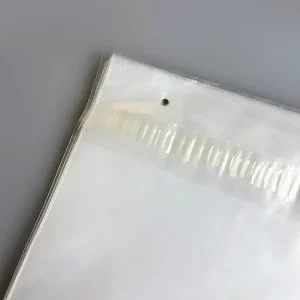
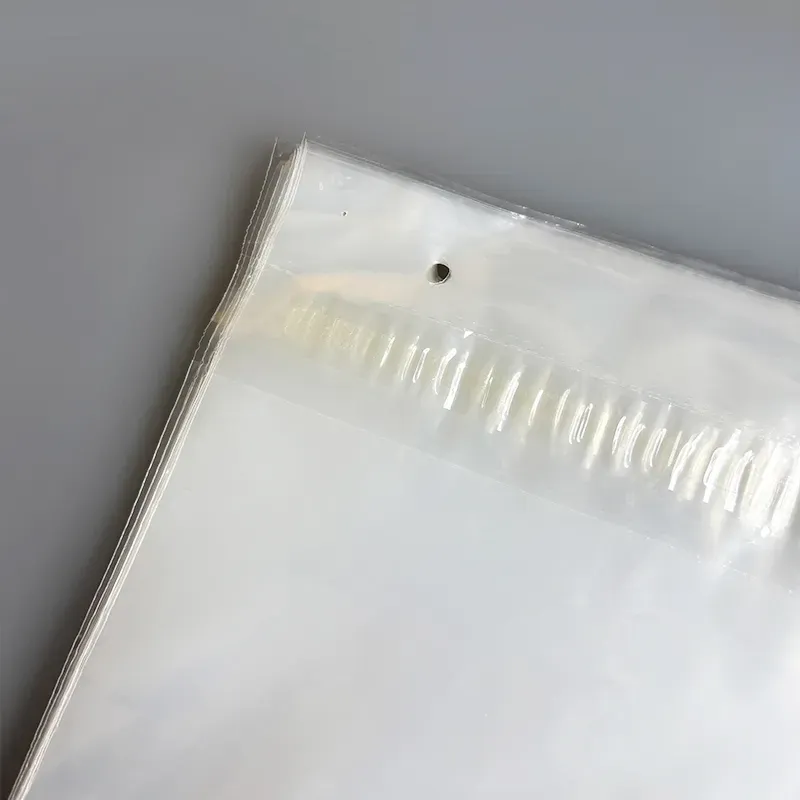
Poly Header Bags are versatile plastic packaging bags designed with a header section at the top for product display, branding, and retail merchandising. They are commonly used to package small consumer goods, accessories, hardware, stationery, textiles, and other lightweight products. The header may include a punched hanging hole, a reinforced hanging area, or a printed header card that allows products to be displayed neatly on retail hooks.
For retailers, wholesalers, and manufacturers, Poly Header Bags provide a practical way to protect products while presenting them attractively. Their transparent body allows customers to view the contents without opening the package, while the header area provides space for product information, brand logos, barcodes, and promotional messages.
As a packaging manufacturer, we can customize Poly Header Bags according to product dimensions, material thickness, printing requirements, sealing methods, and hanging designs. These options make them suitable for different retail environments, product categories, and packaging operations.
Key Takeaways
- Product Type: Plastic packaging bags with an integrated header or attached header card.
- Common Materials: LDPE, HDPE, PP, and other suitable plastic films.
- Main Applications: Retail merchandise, accessories, stationery, hardware, textiles, and small consumer goods.
- Key Features: Transparent packaging, convenient hanging display, customizable printing, and flexible sizing.
- Customization Options: Bag dimensions, film thickness, header design, hanging holes, printing, and closure styles.
- Packaging Benefits: Helps protect products from dust, dirt, and handling during storage and distribution.
- Wholesale Supply: Factory-direct production can support bulk orders, customized specifications, and consistent packaging requirements.
Poly Header Bags: Context and History
Retail packaging has evolved alongside the development of modern supermarkets, department stores, and self-service retail environments. As more products began to be displayed on shelves and hanging fixtures, businesses needed packaging that could protect merchandise while keeping it visible and easy to access.
Poly Header Bags developed as a practical solution for displaying small and lightweight products. By combining a flexible plastic bag with a header section, manufacturers created packaging that could hold merchandise securely and hang conveniently on retail display hooks.
Over time, improvements in plastic film extrusion, bag converting, printing, and punching technology made it easier to manufacture header bags in different sizes and configurations. Businesses could choose clear film for product visibility, colored headers for brand recognition, or printed designs to communicate product details.
Today, Poly Header Bags remain useful in retail packaging, particularly for products that benefit from compact hanging displays. Custom printing and material selection also allow businesses to adapt their packaging to different product requirements and branding strategies.
What Are Poly Header Bags?
Poly Header Bags are plastic bags featuring a header section at the top. Depending on the design, the header may be formed directly from the bag material or supplied as an attached header card. A hanging hole or euro slot can be incorporated into the header to make the package suitable for pegboard displays and retail hooks.
The bag body holds and protects the product, while the header supports product identification, branding, and merchandising. Some designs use a heat-sealed top, an adhesive flap, or another closure method to keep the contents inside.
Unlike ordinary flat poly bags, Poly Header Bags are specifically designed to combine packaging and product presentation. They can help retailers organize small products and display them without requiring additional boxes or bulky packaging.
Common design options include:
- Clear Poly Header Bags: Allow customers to see the product inside.
- Printed Header Bags: Display brand logos, product names, barcodes, and instructions.
- Header Card Bags: Use a separate card for additional branding or product information.
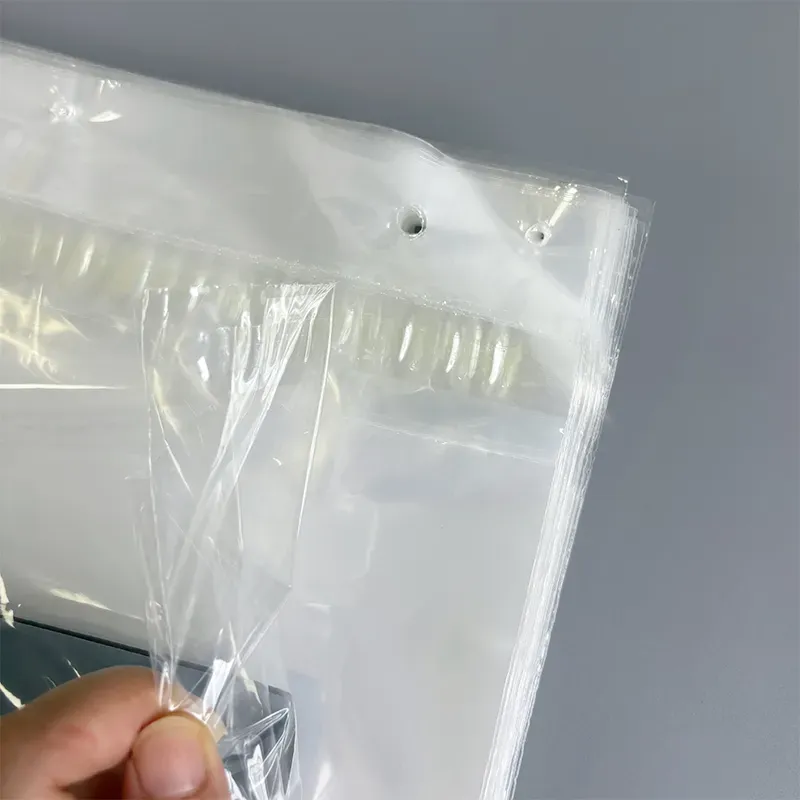
- Self-Seal Header Bags: Feature an adhesive flap for convenient closing.
- Custom Hanging Bags: Include round holes, euro slots, or reinforced hanging areas.
The most suitable design depends on the product’s weight, shape, packaging process, and intended display method.
The Importance of Poly Header Bags in Retail Packaging
Retail packaging needs to do more than contain a product. It should also support product visibility, communicate essential information, and make merchandise easy to display.
Poly Header Bags combine these functions in a relatively compact format. Their transparent film helps customers identify the contents quickly, while the header creates a designated area for branding and product details.
For retailers, hanging header bags can help make efficient use of vertical display space. Similar products can be grouped together on hooks, allowing staff to arrange merchandise by size, style, or product category.
For manufacturers and wholesalers, these bags can simplify packaging for small items that do not require rigid boxes. Depending on the product and selected specifications, they may also help reduce unnecessary packaging volume during shipping and storage.
Custom Poly Header Bags can further strengthen brand consistency. Printed logos, colors, barcodes, and product descriptions make it easier to identify products across different retail channels.
However, the appropriate material and design should always be selected according to the product’s weight, sharp edges, storage conditions, and applicable packaging regulations.
Biodegradable vs. Conventional Poly Header Bags
Conventional Poly Header Bags are generally manufactured from plastic materials such as LDPE, HDPE, or PP. They are widely used because these materials offer different combinations of flexibility, stiffness, clarity, and strength.
Biodegradable alternatives may be available for businesses seeking specific end-of-life characteristics. However, not every bio-based plastic is biodegradable, and not every biodegradable material is suitable for the same packaging applications.
The main differences include:
Conventional Poly Header Bags
- Commonly made from LDPE, HDPE, or PP.
- Available in a wide range of thicknesses and sizes.
- Suitable for many retail and industrial packaging applications.
- Can offer good clarity, flexibility, or stiffness depending on the material.
- End-of-life options depend on the polymer, local recycling infrastructure, and product design.
Biodegradable Poly Header Bags
- Made from materials formulated to biodegrade under specified conditions.
- May require particular industrial or other controlled environments, depending on the formulation.
- Need appropriate testing and substantiated environmental claims.
- May have different mechanical properties, shelf life, and cost compared with conventional plastic bags.
When selecting biodegradable packaging, buyers should verify the relevant test standards, certification scope, and disposal requirements. Bio-based content alone does not prove that a product will biodegrade, and biodegradable packaging should not automatically be described as home-compostable or recyclable.
For most retail applications, the best choice is the material that meets the required protection, display, durability, and end-of-life criteria.
Using Poly Header Bags for Storage and Packaging
Poly Header Bags can support both product packaging and organized storage. Their flexible construction makes them suitable for a wide variety of lightweight products, while the header provides a convenient area for identification and display.
In retail environments, these bags are commonly used for accessories, craft supplies, small hardware, stationery, and textile items. Products can be packaged individually and hung on display hooks, helping stores maintain a tidy presentation.
In warehouses, Poly Header Bags can also be used to group small components or accessories. Printed labels and barcodes can help staff identify different products during picking, inventory management, and distribution.
For effective use, the bag dimensions should match the product size. Excessively large bags may allow items to move around, while bags that are too small can make loading difficult or place unnecessary stress on the seams.
The closure method should also suit the intended use. Heat sealing can provide a closed package, while adhesive flaps may be more convenient for manual packing. Products that are heavy, sharp, fragile, or sensitive to moisture may require additional protective features.
Composition: Polyethylene and Other Plastic Materials
Poly Header Bags are typically produced from flexible or semi-rigid plastic films. The selected polymer affects the bag’s transparency, flexibility, strength, stiffness, printability, and overall cost.
Polyethylene is widely used in flexible packaging because it can provide a useful balance of toughness, flexibility, and moisture resistance. Polypropylene is another option when a different level of stiffness or clarity is required.
The header section may be made from the same film as the bag body or from a separate material, depending on the design. Some products use an attached paper or cardboard header for branding, while others use an all-plastic construction.
The complete package should be designed as a system. A suitable bag body, secure seals, appropriately sized hanging hole, and adequately reinforced header all contribute to packaging performance.
For wholesale orders, buyers should confirm the material grade, film thickness, header dimensions, closure specifications, and any applicable compliance requirements before production.
Common Materials Used in Poly Header Bags
Several plastic materials can be considered for Poly Header Bags, depending on the intended application.
1. LDPE (Low-Density Polyethylene)
LDPE is a flexible plastic commonly used for clear retail packaging. It is suitable for products that require a soft bag with good flexibility and practical moisture resistance.
Typical applications: Accessories, textiles, craft supplies, and lightweight consumer goods.
2. HDPE (High-Density Polyethylene)
HDPE generally offers greater stiffness than LDPE at comparable thicknesses. It can be suitable for applications where a firmer bag structure is preferred.
Typical applications: Selected hardware products, small components, and general merchandise.
3. PP (Polypropylene)
PP films can provide a relatively crisp appearance and good transparency, depending on the film structure. They may be suitable for retail products where clear presentation is important.
Typical applications: Stationery, accessories, craft items, and selected retail merchandise.
4. Recycled Plastic Materials
Recycled content may be incorporated into suitable packaging designs when material quality, appearance, mechanical performance, and applicable regulations permit.
Buyers should confirm whether recycled content is appropriate for the intended application and whether any required documentation or recycled-content verification is available.
The material selection should be based on actual product requirements rather than polymer names alone. Film formulation, thickness, sealing quality, and bag dimensions all affect final performance.
Characteristics of Poly Header Bags
Poly Header Bags offer several practical features for retail and commercial packaging.
1. Product Visibility
Clear film allows customers and warehouse staff to identify packaged items without opening the bag.
2. Hanging Display Design
A punched hole or euro slot allows the package to be displayed on compatible retail hooks or pegboards.
3. Customizable Header Area
The header can accommodate brand logos, product names, barcodes, instructions, and other relevant information.
4. Flexible Material Options
Different plastic films can be selected to meet requirements for softness, stiffness, clarity, and durability.
5. Multiple Closure Methods
Depending on the design, the bag may use heat sealing, an adhesive flap, or another suitable closure.
6. Custom Sizes and Thicknesses
Bag dimensions and film thickness can be tailored to the product, packaging process, and display requirements.
7. Efficient Retail Organization
Consistent bag sizes and header designs help retailers arrange similar products neatly and maintain a more uniform display.
Actual performance depends on the materials, dimensions, manufacturing quality, and intended use.
Advantages of Poly Header Bags
Poly Header Bags provide several advantages for manufacturers, wholesalers, and retailers.
Improved Product Presentation
The combination of transparent film and a header section allows merchandise to remain visible while providing space for branding and product information.
Convenient Hanging Display
The header design supports hanging merchandise on suitable retail fixtures. This can help stores organize products by category and make efficient use of display space.
Flexible Customization
Businesses can specify bag size, film thickness, header dimensions, printing, hanging-hole style, and closure options to suit different products.
Practical Product Protection
When correctly specified and sealed, these bags can help protect merchandise from dust, dirt, and routine handling. They should not be assumed to provide a complete moisture barrier or tamper-evident protection unless the design has been validated for those purposes.
Lightweight Packaging
Compared with some rigid packaging formats, flexible poly bags can offer a lightweight solution for suitable products. The actual savings in storage space and shipping costs depend on the product, packing method, and order volume.
Support for Brand Recognition
Custom-printed headers can make product identification easier and create a consistent appearance across retail packaging.
Suitable for Bulk Production
For businesses with repeat packaging needs, standardized specifications can support more consistent ordering and production planning.
Application Scenarios for Poly Header Bags
Poly Header Bags are suitable for many products that benefit from compact packaging and hanging display.
Retail Accessories
Hair accessories, fashion accessories, small household items, and selected personal accessories can be packaged individually for shelf or pegboard display.
Stationery and Office Supplies
Small stationery products, labels, craft tools, and selected office accessories can be grouped in transparent bags with printed headers for easy identification.
Hardware and Small Components
Screws, fasteners, fittings, and other small components may be packed in header bags when the bag material and seal are suitable for their weight and shape. Sharp or heavy items may require reinforced packaging.
Textile and Apparel Accessories
Socks, fabric accessories, small garments, and other lightweight textile products can be displayed in clear header bags to keep them grouped and presentable.
Craft and Hobby Products
Beads, decorative pieces, hobby accessories, and small craft supplies can be packaged in different bag sizes with customized headers.
Promotional Products
Small giveaways, branded accessories, and event merchandise can be packaged with custom-printed headers that display campaign information or brand identity.
Electronic Accessories
Lightweight electronic accessories and small non-sensitive components may be packaged in Poly Header Bags. Products requiring electrostatic protection, specialized shielding, or enhanced moisture control need appropriately engineered packaging rather than ordinary poly bags.
How to Use Poly Header Bags Effectively
Correct packaging procedures can improve product presentation and reduce avoidable packaging problems.
Step 1: Select the Correct Bag Size
Measure the product’s length, width, and thickness. Allow sufficient room for loading without leaving excessive unused space.
Step 2: Choose an Appropriate Material
Select LDPE, HDPE, PP, or another suitable film according to the required flexibility, clarity, stiffness, and product protection.
Step 3: Confirm the Header Design
Check that the header provides sufficient space for product information and that the hanging hole matches the intended retail fixture.
Step 4: Insert the Product Carefully
Ensure the product fits comfortably inside the bag. Avoid forcing sharp edges or protruding parts against the film.
Step 5: Close the Bag Securely
Use the specified closure method, such as heat sealing or an adhesive flap. Check that the closure is suitable for the product’s weight and handling conditions.
Step 6: Apply Product Information
Add or verify labels, barcodes, product descriptions, and other required details. Printed information should remain readable and comply with applicable labeling requirements.
Step 7: Inspect the Finished Package
Check for damaged film, weak seals, incorrect printing, and defects around the hanging hole or header. For large orders, an agreed quality-control procedure can help maintain consistency.
Storage Method
Proper storage helps maintain the condition of Poly Header Bags before they are used.
- Keep Bags Dry: Store packaging in a clean, dry environment to prevent contamination and damage from moisture.
- Avoid Direct Sunlight: Prolonged exposure to ultraviolet light and heat may affect certain plastic films.
- Control Temperature: Follow the supplier’s recommended storage conditions and avoid excessive heat.
- Prevent Dust and Contamination: Keep bags in their original packaging or sealed protective cartons until required.
- Avoid Excessive Compression: Store cartons in a way that prevents deformation of the header section or damage to the bags.
- Use Stock in Rotation: Apply a first-in, first-out inventory system when appropriate, particularly for printed packaging or materials with specified storage limits.
For custom-printed Poly Header Bags, buyers should also protect the print surface from abrasion and follow any supplier recommendations regarding storage life.
How to Dispose of Poly Header Bags
The appropriate disposal method depends on the plastic material, package construction, local waste-management infrastructure, and applicable regulations.
Check the Material and Local Rules
Identify the polymer where possible and check whether local recycling programs accept that type of flexible packaging. Acceptance rules differ between regions and recycling facilities.
Separate Different Materials When Required
Some Poly Header Bags include a paper or cardboard header attached to a plastic bag. If local recycling instructions require separation, remove the header before disposing of the components through their respective accepted streams.
Avoid Unsupported Environmental Claims
Do not assume that a plastic bag is recyclable, biodegradable, or compostable solely because it is lightweight, transparent, or made partly from bio-based material. Verify the product specifications and relevant certifications.
Follow Instructions for Specialized Packaging
If the packaging contains electronic components, chemicals, contaminated items, or other regulated products, follow the applicable disposal requirements for the contents and packaging.
For businesses purchasing large volumes of Poly Header Bags, discussing material selection and end-of-life options with the supplier can help align packaging decisions with local waste-management capabilities.
Choosing Poly Header Bags
Selecting the right Poly Header Bags requires more than comparing unit prices. Buyers should evaluate the complete packaging specification to ensure that the bags meet product, display, and commercial requirements.
1. Product Dimensions
Measure the product accurately and choose a bag size that allows easy loading while keeping the contents appropriately positioned.
2. Film Thickness and Strength
The required thickness depends on product weight, shape, handling conditions, and the risk of puncture or tearing. Heavier products may require thicker film or a reinforced construction.
3. Material Selection
Compare LDPE, HDPE, and PP according to the required flexibility, stiffness, clarity, and application. Ask for samples when material performance is uncertain.
4. Header Structure
Confirm the header height, width, hanging-hole design, and reinforcement requirements. The header should support the packaged product during normal display and handling.
5. Printing Requirements
Determine whether the bag requires a printed header, a separate header card, or printing directly on the plastic film. Confirm artwork, colors, barcode placement, and the required print quality before production.
6. Closure Method
Choose between heat sealing, adhesive flaps, or other suitable options based on the packaging process and whether the bag needs to be opened and closed again.
7. Certifications and Compliance
Specify any required material declarations, test reports, or certifications relevant to the product and destination market. Food-contact, children’s-product, electronic, and other regulated applications may require additional verification.
8. Minimum Order Quantity and Lead Time
Ask the supplier about minimum order quantities, sample availability, production lead time, printing setup, and shipping arrangements. Custom specifications may affect both the MOQ and final unit price.
9. Supplier Manufacturing Capability
Evaluate the supplier’s experience with custom bag production, printing consistency, quality control, packaging specifications, and export orders.
Before placing a bulk order, request a quotation based on the same dimensions, material, thickness, printing design, closure method, quantity, and delivery terms. This makes supplier comparisons more meaningful.
Conclusion
Poly Header Bags offer a practical packaging solution for businesses that need product protection, clear visibility, and convenient hanging display. Their flexible construction and customizable header design make them suitable for accessories, stationery, hardware, textiles, craft supplies, and many other lightweight retail products.
Choosing the right Poly Header Bags involves evaluating material, size, thickness, header strength, printing, closure, and disposal requirements. A well-designed bag can improve product presentation, simplify retail organization, and support consistent brand communication.
For wholesalers, retailers, and product manufacturers, working with an experienced packaging supplier can make it easier to develop custom Poly Header Bags that match specific product and market requirements. Before ordering in bulk, confirm the final specifications, review samples where necessary, and agree on quality standards and delivery arrangements.
FAQ
1. What Are Poly Header Bags Used For?
Poly Header Bags are commonly used to package and display small retail products, including accessories, stationery, hardware, textiles, craft supplies, and promotional merchandise. Their header section allows the package to hang on compatible retail hooks.
2. What Materials Are Used to Make Poly Header Bags?
Common materials include LDPE, HDPE, and PP. The appropriate material depends on the required flexibility, stiffness, transparency, strength, and intended application.
3. Can Poly Header Bags Be Custom Printed?
Yes. Depending on the design and production process, businesses can customize the bag or header with brand logos, product names, barcodes, instructions, colors, and promotional information.
4. Can Poly Header Bags Have Different Hanging Holes?
Yes. Common options include round holes and euro slots. The design should match the retail display fixture and provide sufficient strength for the packaged product.
5. Are Poly Header Bags Recyclable?
Some Poly Header Bags may be recyclable where suitable collection and processing systems accept the material. Recycling depends on the polymer, attached components, local rules, and the receiving facility’s requirements.
6. Are Biodegradable Poly Header Bags Available?
Biodegradable alternatives may be available depending on the supplier and application. Buyers should confirm the material composition, relevant certifications, required degradation conditions, and suitability for the intended product.
7. Can Poly Header Bags Be Used for Heavy Products?
They may be suitable for some heavier products if the film thickness, seals, header, and hanging hole are appropriately designed and tested. Very heavy or sharp products may require reinforced or alternative packaging.
8. What Information Is Needed to Request a Quote for Custom Poly Header Bags?
Provide the product dimensions, bag size, material, thickness, header design, hanging-hole type, printing artwork, closure method, order quantity, and destination country. Reference samples or product photos can also help the supplier evaluate the requirements.
9. What Is the MOQ for Custom Poly Header Bags?
The minimum order quantity depends on the bag dimensions, material, printing requirements, production method, and supplier capabilities. Request a quotation for your preferred specifications to confirm the applicable MOQ and unit price.
10. How Can I Choose a Reliable Poly Header Bags Manufacturer?
Look for a manufacturer with relevant production experience, clear material specifications, consistent quality-control procedures, customization capabilities, transparent quotations, and experience supplying your target market. Reviewing samples before bulk production can help reduce purchasing risks.