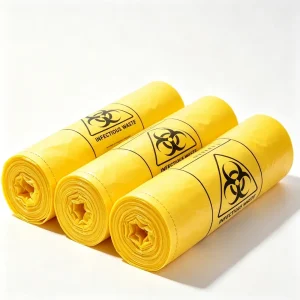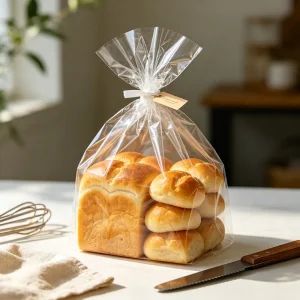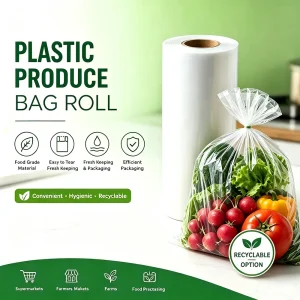
Choosing the right packaging bags can have a significant impact on production efficiency, packaging quality, and overall operating costs. For companies using manual, semi-automatic, or automatic packaging systems, pre-opened bags can provide a convenient solution by keeping each bag ready for filling and sealing.
However, not every pre-opened bag is suitable for every packaging application. Bag material, size, thickness, opening method, sealing requirements, printing, and machine compatibility all need to be considered before placing a bulk order.
This guide explains the key factors buyers should evaluate when selecting pre-opened bags for their packaging line.
What Are Pre-Opened Bags?
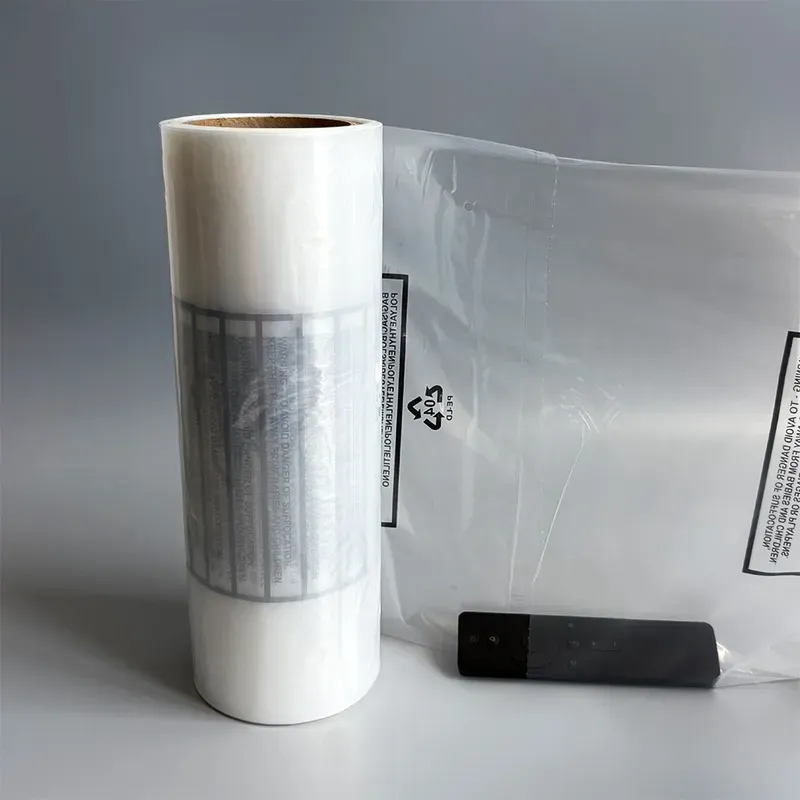
Pre-opened bags are plastic bags that are manufactured and supplied with the opening prepared for quick access during packaging. Depending on the production and packaging requirements, the bags can be supplied individually, on rolls, or in configurations designed for automatic or semi-automatic packaging equipment.
Unlike standard flat plastic bags that may require workers to separate and open each bag manually, pre-opened bags are designed to make the loading process faster and more convenient.
They are commonly used for packaging food products, industrial components, electronic accessories, medical products, hardware, agricultural products, garments, and other items that require efficient bagging.
For high-volume operations, the right pre-opened bags can help create a more consistent packaging process and reduce unnecessary handling.
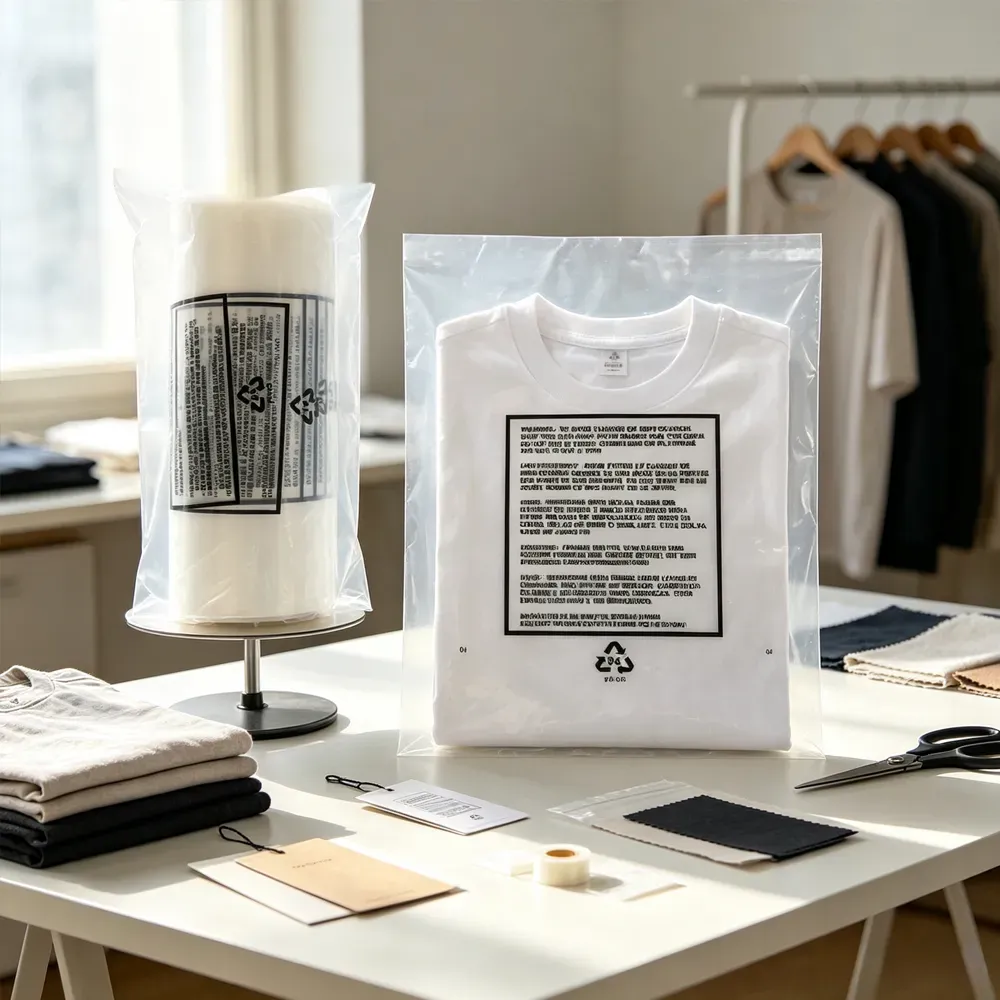
Why Are Pre-Opened Bags Important for Packaging Lines?
Packaging operations often involve repetitive tasks. If workers have to separate, open, position, and load every individual bag, the process can become slower and more labor-intensive.
Pre-opened bags simplify this process by providing bags that are ready for filling.
Depending on the application, they can offer several potential advantages:
- Faster bag loading
- Easier product insertion
- More consistent packaging
- Reduced manual handling
- Better compatibility with packaging equipment
- Improved workplace efficiency
- Convenient storage and dispensing
For manufacturers handling large production volumes, these advantages can become particularly important.
1. Choose the Right Bag Material
The first consideration when purchasing pre-opened bags is the plastic material.
Different materials provide different levels of flexibility, clarity, strength, moisture resistance, and heat-sealing performance.
Common options include:
LDPE
LDPE is flexible and commonly used for general packaging applications. It can be suitable for garments, lightweight products, industrial components, and various retail packaging applications.
HDPE
HDPE generally provides higher stiffness and strength than LDPE. It can be considered when the packaging application requires a more rigid bag structure.
CPP
CPP provides good clarity and heat-sealing properties and is commonly used in certain food and product packaging applications.
PP
PP bags can provide good transparency, stiffness, and strength for specific packaging requirements.
The correct material depends on the product being packaged, required strength, appearance, sealing method, and end-use environment.
2. Determine the Correct Bag Size
Bag dimensions are another important factor when choosing pre-opened bags.
The bag should be large enough to accommodate the product without excessive stress on the seams or opening. At the same time, an oversized bag can increase material consumption and packaging costs.
Before requesting a quotation, buyers should provide:
- Product length
- Product width
- Product height
- Required bag opening
- Side or bottom seal requirements
- Extra space required for sealing
For irregularly shaped products, it is also important to consider how the product will be inserted into the bag.
A packaging manufacturer can usually recommend suitable dimensions based on the product and filling process.
3. Select the Appropriate Thickness
Film thickness affects strength, flexibility, appearance, and material consumption.
For lightweight products, a thinner film may provide sufficient protection while helping reduce material usage. Heavier or sharp-edged products may require a thicker film to reduce the risk of tearing or puncturing.
There is no universal thickness that works for every application.
When selecting pre-opened bags, buyers should consider:
- Product weight
- Product shape
- Sharp edges
- Handling conditions
- Transportation requirements
- Required durability
- Packaging equipment
The ideal thickness should provide sufficient performance without unnecessarily increasing the cost of the bag.
4. Check Packaging Machine Compatibility
Machine compatibility is one of the most important considerations for buyers using automated packaging systems.
Different packaging machines may require specific bag dimensions, opening configurations, film properties, feeding methods, and sealing characteristics.
Before ordering pre-opened bags, provide the supplier with information about your packaging equipment whenever possible.
Useful information may include:
- Machine manufacturer
- Machine model
- Bag feeding method
- Required bag dimensions
- Sealing method
- Packaging speed
- Product loading method
If possible, buyers should send samples or machine specifications to the manufacturer for evaluation.
This can help reduce the risk of ordering bags that do not run smoothly on the production line.
5. Consider the Opening and Feeding Method
The opening configuration can directly affect how quickly products can be loaded.
Some packaging lines require bags that remain open and easy to access during filling. Others may require a specific feeding or dispensing configuration.
The supplier should understand how the bags will be presented to operators or equipment.
For automated applications, even small differences in bag dimensions or film performance can affect feeding stability.
Therefore, buyers should not focus only on the bag itself. The complete relationship between the bag, product, operator, and packaging machine should be considered.
6. Decide Whether Custom Printing Is Required
For companies using packaging as part of their branding strategy, custom printing can be an important option.
Pre-opened bags can potentially be printed with:
- Company logos
- Product information
- Handling instructions
- Barcodes
- Recycling information
- Regulatory information
- Brand graphics
The number of colors, printing area, artwork, and printing method can affect the final quotation.
For businesses purchasing large quantities, custom printing may also help create a more professional and recognizable packaging appearance.
Before production, buyers should confirm artwork dimensions, printing colors, repeat length, and acceptable color tolerance with the supplier.
7. Consider the End-Use Application
The product being packaged determines many of the required bag specifications.
For example, a manufacturer packaging small electronic components may prioritize clarity and protection from dust, while a food packaging buyer may focus more heavily on food-contact suitability and sealing performance.
Common applications for pre-opened bags include:
| Application | Common Requirements |
|---|---|
| Food packaging | Suitable material, sealing performance, hygiene |
| Electronics | Clean packaging, clarity, protection |
| Hardware | Strength, puncture resistance |
| Garments | Flexibility, appearance, easy loading |
| Industrial parts | Durability and appropriate thickness |
| Agricultural products | Strength and product protection |
| Retail products | Appearance, printing, convenient handling |
The final specification should always be based on the actual product and packaging environment.
8. Evaluate Food-Contact and Compliance Requirements
If the bags are intended for food packaging, buyers should confirm that the selected material and production process meet the applicable requirements of the target market.
Depending on the destination country and application, buyers may request relevant documentation such as food-contact declarations, migration test reports, or other compliance documents.
For non-food applications, other requirements may apply.
When requesting a quotation, clearly explain the destination market and intended application so the supplier can recommend the appropriate material and documentation.
9. Compare Quality Before Comparing Price
Price is important for B2B buyers, but the lowest quotation is not necessarily the lowest overall packaging cost.
Poor-quality bags can lead to:
- Bag breakage
- Difficult opening
- Machine stoppages
- Product damage
- Increased labor
- Higher packaging waste
- Customer complaints
When comparing suppliers, buyers should evaluate film consistency, dimensions, sealing quality, opening performance, printing quality, packaging method, and quality-control procedures.
Requesting samples before mass production is one of the most practical ways to evaluate whether the pre-opened bags are suitable for the application.
10. Ask About MOQ and Production Capacity
Minimum order quantity is another important purchasing consideration.
Different manufacturers may have different MOQs depending on material, size, printing requirements, and production process.
For standard unprinted bags, the MOQ may be different from custom-printed bags.
Buyers should also consider the supplier’s production capacity, especially when purchasing large volumes or establishing a long-term supply relationship.
Important questions include:
- What is the MOQ?
- What is the normal production lead time?
- Can the supplier handle repeat orders?
- Is custom printing available?
- Can samples be provided?
- What quality-control process is used?
- What packaging method is used for shipment?
These questions can help buyers compare suppliers more effectively.
How to Choose the Right Pre-Opened Bags?
A simple purchasing process can help reduce mistakes.
Step 1: Define the Product
Identify the product type, dimensions, weight, shape, and surface characteristics.
Step 2: Define the Packaging Process
Determine whether the bags will be loaded manually, semi-automatically, or automatically.
Step 3: Select the Material
Choose LDPE, HDPE, PP, CPP, or another suitable material according to the application.
Step 4: Determine Size and Thickness
Provide the supplier with accurate product dimensions and required bag specifications.
Step 5: Confirm Machine Compatibility
Share packaging machine information and, when possible, test samples on the actual production line.
Step 6: Confirm Printing and Compliance
Determine whether custom printing, food-contact documentation, or other certifications are required.
Step 7: Request Samples and a Quotation
Test the samples before approving mass production and compare suppliers based on both price and performance.
Final Thoughts
Choosing the right pre-opened bags is not simply a matter of selecting the cheapest bag available. Buyers need to consider material, dimensions, thickness, opening configuration, machine compatibility, printing, application requirements, quality, MOQ, and production capacity.
For companies operating high-volume packaging lines, a properly designed bag can make the packaging process more efficient and consistent.
When requesting a quotation from a packaging manufacturer, provide as much information as possible about your product, packaging equipment, required dimensions, material, thickness, printing, quantity, and destination market. This allows the manufacturer to provide a more accurate recommendation and quotation.
For B2B buyers, the goal should be to find pre-opened bags that provide the right balance between packaging performance, production efficiency, quality, and overall cost.