Garbage bags are one of the most essential consumable packaging products in daily life, commercial cleaning, and industrial waste management. Although they look simple, different bag structures, materials, and manufacturing processes determine their strength, usability, and application scenarios.
This guide provides a complete breakdown of garbage bag types, production processes, features, and real-world applications, helping you choose the right solution for different needs.
1. Flat Top Garbage Bags (Flat Seal Trash Bags)
Flat Top Trash Bags
Overview
Flat top garbage bags are the most basic and widely used type of waste disposal bags. They are designed for general-purpose trash collection in homes and commercial environments.
Manufacturing Process
These bags are typically produced using:
- Blown film extrusion (LDPE/HDPE)
- Bottom sealing or side sealing
- Optional flexographic printing for branding
Key Features
- Simple structure and cost-effective production
- Flexible sizing for different bin capacities
- Moderate load-bearing performance
- Easy to produce in bulk
Applications
- Household kitchens and bathrooms
- Office waste bins
- Hotel room cleaning
- Retail and light commercial use
2. Drawstring Garbage Bags (Easy-Tie Trash Bags)
Drawstring Trash Bags
Overview
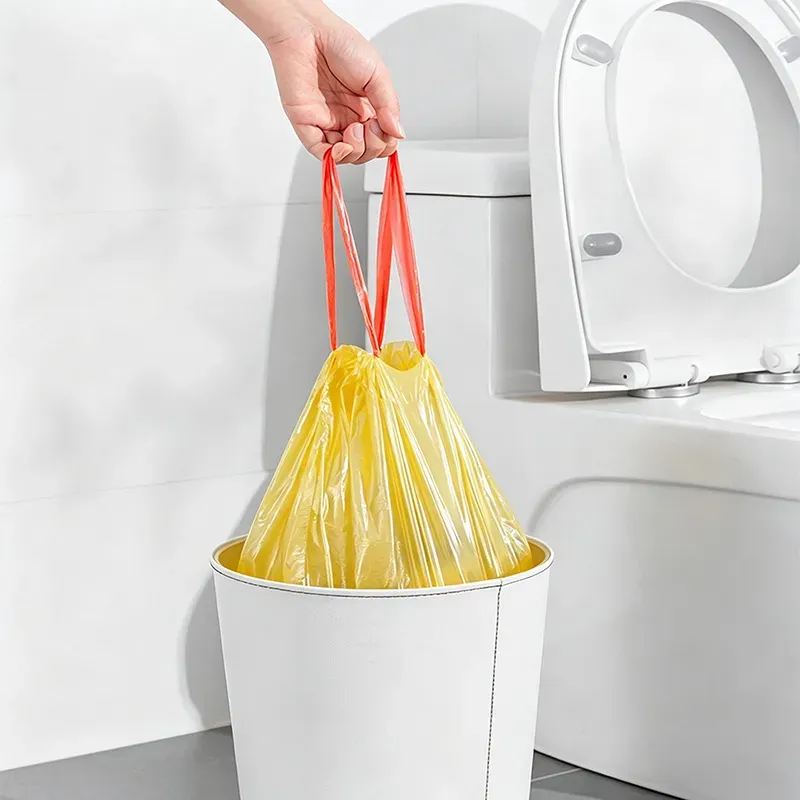
Drawstring garbage bags are designed for convenient closing and carrying. They are widely used in households and commercial cleaning due to their user-friendly structure.
Manufacturing Process
- Co-extruded PE film (LDPE/LLDPE blend)
- Reinforced mouth structure
- Integrated PP or PE drawstring insertion
- Heat sealing for leak prevention
Key Features
- Easy to close and carry without direct contact with waste
- Strong sealing performance to prevent leakage
- Improved hygiene and convenience
- Suitable for heavier daily waste loads
Applications
- Home kitchens and bathrooms
- Office cleaning systems
- Residential property management
- Light medical or sanitary environments
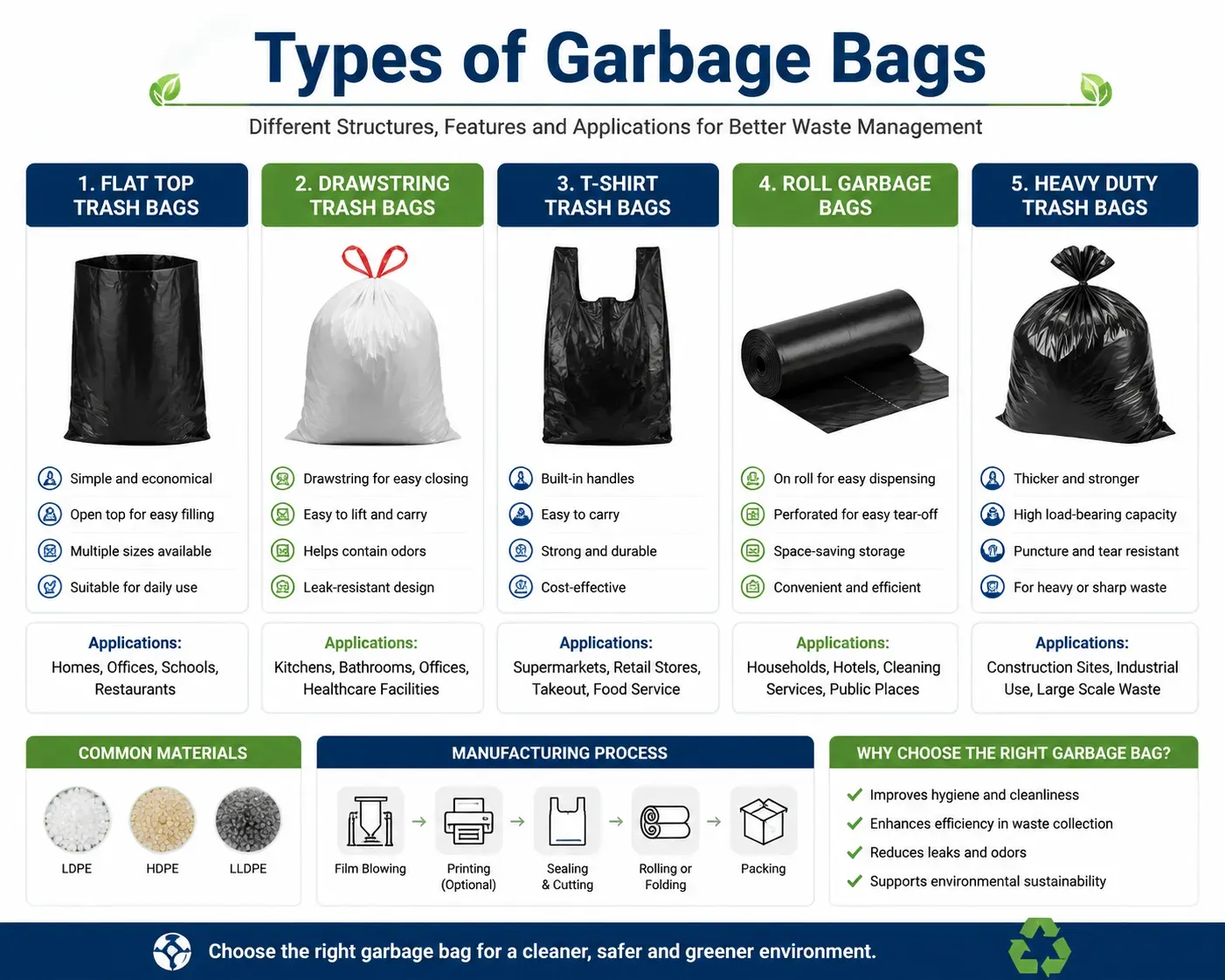
3. T-Shirt Style Garbage Bags (Handle Cut Bags)
T-Shirt Trash Bags
Overview
T-shirt garbage bags feature built-in handles, making them ideal for quick packing and carrying, especially in retail and food service industries.
Manufacturing Process
- HDPE/LDPE blown film production
- Die-cut handle punching
- Heat sealing at the bottom
- Optional printed branding
Key Features
- Strong handle structure for easy lifting
- High efficiency in packaging operations
- Low production cost
- Suitable for high-frequency usage
Applications
- Supermarkets and grocery stores
- Fresh food markets
- Restaurants and takeout packaging
- Retail packaging operations
4. Roll Garbage Bags (Perforated on Roll Bags)
Trash Bags on Roll
Overview
Roll garbage bags are perforated and packed in rolls for easy tear-off usage, making them convenient for continuous cleaning environments.
Manufacturing Process
- Automatic film winding into rolls
- Perforation punching for easy separation
- Optional coreless or core-based roll design
- Heat sealing and cutting systems
Key Features
- Easy tear-off design for fast usage
- Space-saving packaging
- Suitable for automated dispensing systems
- Clean and organized storage
Applications
- Household daily use
- Hotel housekeeping
- Commercial cleaning services
- Public facilities and restrooms
5. Heavy Duty Industrial Garbage Bags
Heavy Duty Trash Bags
Overview
Heavy-duty garbage bags are designed for demanding environments where waste is heavy, sharp, or irregular in shape.
Manufacturing Process
- Multi-layer co-extrusion film technology
- High-density polyethylene (HDPE) or reinforced LDPE
- Thickened film structure (high micron level)
- Enhanced sealing for puncture resistance
Key Features
- High tensile strength and load-bearing capacity
- Excellent puncture and tear resistance
- Leak-proof for liquid or sharp waste
- Suitable for harsh environments
Applications
- Construction sites
- Industrial manufacturing facilities
- Warehouse and logistics centers
- Municipal waste collection

6. Garbage Bag Manufacturing Technologies
Modern garbage bags are produced using advanced plastic processing technologies, including:
1. Blown Film Extrusion
Raw plastic pellets are melted and inflated into film tubes, forming the base material of the bag.
2. Co-Extrusion Technology
Multiple layers of materials are combined to improve strength, flexibility, and barrier performance.
3. Sealing Methods
- Bottom seal
- Side seal
- Star seal bottom (for leak resistance)
4. Printing Technology
Flexographic printing is commonly used for branding, labeling, and product identification.
5. Conversion Process
Includes cutting, folding, perforating, and rolling depending on bag type.
7. Key Performance Characteristics of Garbage Bags
Different bag structures offer different performance levels:
- Load capacity: From light household waste to heavy industrial debris
- Sealing performance: Leak resistance and odor control
- Durability: Tear and puncture resistance
- Convenience: Ease of use, carrying, and disposal
- Cost efficiency: Balance between material and performance
8. Application Scenarios Summary
Garbage bags are widely used across multiple industries:
- Household waste management
- Commercial cleaning services
- Hotel and hospitality industry
- Food service and restaurant operations
- Industrial and manufacturing waste disposal
- Construction and demolition sites
- Public sanitation systems
Conclusion
Garbage bags may seem like a simple product, but different structures such as flat top bags, drawstring bags, T-shirt bags, roll bags, and heavy-duty industrial bags are engineered for very different applications. Understanding their manufacturing processes and performance characteristics helps businesses choose the right packaging solution for cost efficiency, safety, and usability.