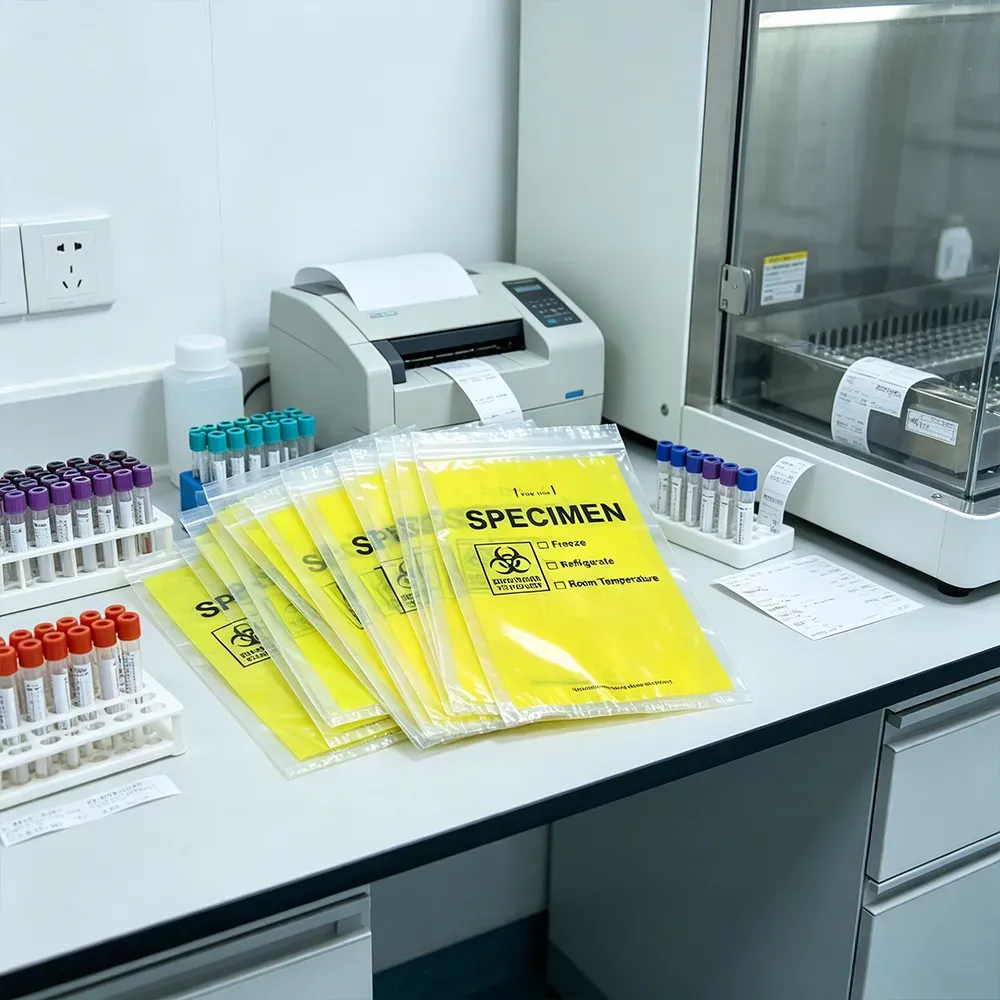
Medical specimen Bags is a critical step in laboratory and healthcare workflows. To ensure safety, accuracy, and regulatory compliance, hospitals and laboratories widely use a double-bag system in medical specimen bags. This design is not just a packaging preference—it is a standardized safety practice that helps prevent contamination, leakage, and cross-infection during sample handling and transportation.
What Is a Double-Bag System in Specimen Transport?
The double-bag system consists of two separate layers of protection:
The inner bag (primary bag) directly contains the biological specimen such as blood, urine, tissue, or other diagnostic samples. It must be leak-proof, securely sealed, and often features a zip or self-seal closure.
The outer bag (secondary bag) is used as a protective transport layer. It does not directly contact the specimen and is typically designed to hold documentation such as test requisition forms in a separate compartment.
Together, these two layers form a controlled packaging system that reduces biological risk during handling and transportation.
1. Leak Prevention and Containment Safety
One of the most important functions of the double-bag system is preventing leakage.
If the primary bag is damaged or improperly sealed, the secondary outer bag acts as a backup barrier to contain any liquid or biological material. This significantly reduces the risk of exposure to healthcare workers, couriers, and laboratory staff.
In real-world transport conditions, samples may be exposed to pressure, impact, or temperature changes. The double-layer design ensures that even in failure scenarios, contamination does not spread.
2. Biological Hazard Control and Cross-Infection Prevention
Medical specimens may contain infectious agents such as bacteria, viruses, or other pathogens. A single-layer container increases the risk of accidental exposure.
The double-bag system creates an additional isolation layer that helps:
- Reduce biological contamination risks
- Prevent cross-contamination between samples
- Improve overall biosafety during handling and storage
This is especially important in clinical diagnostics, pathology labs, and infectious disease testing environments.
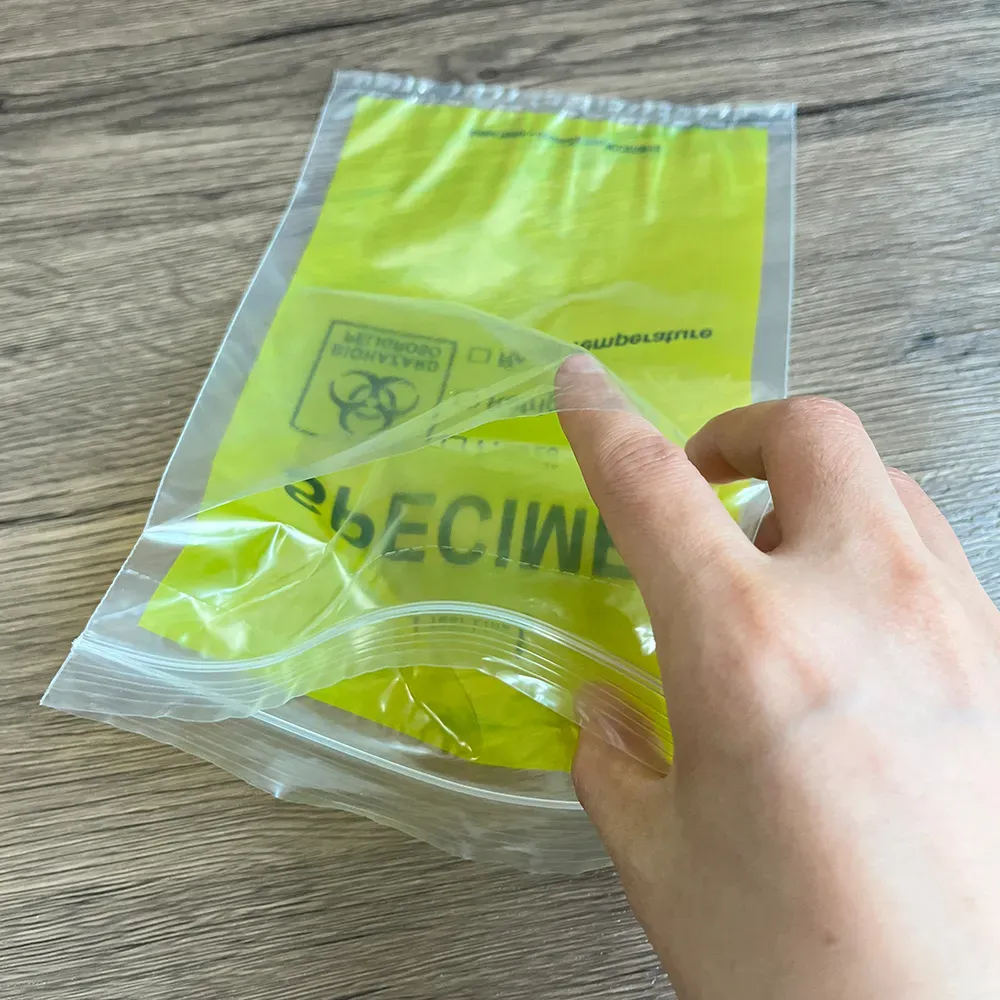
3. Separation of Documents and Specimens
In laboratory workflows, each specimen is typically accompanied by requisition forms, barcodes, or patient information sheets.
The outer bag often includes a separate pocket or compartment to store these documents, ensuring they remain clean, readable, and completely isolated from the biological sample.
This separation helps avoid:
- Document contamination from blood or fluids
- Loss of sample identity due to damaged paperwork
- Processing errors in laboratory information systems
4. Compliance with International Transport Regulations
The double-bag structure is not optional in many healthcare systems. It aligns with global biohazard transport requirements such as UN3373 Category B biological substance regulations.
Most laboratory and hospital protocols require a primary + secondary packaging system to ensure safe transport of diagnostic samples.
Failure to comply with these standards may result in:
- Rejection of samples by laboratories
- Safety violations during transport
- Increased liability risks for healthcare providers
5. Improved Handling Efficiency and Sample Identification
Modern specimen bags are often designed with clear outer layers, labeling areas, and barcode compatibility.
The double-bag system improves operational efficiency by:
- Allowing quick visual identification of samples
- Supporting barcode scanning without opening packages
- Reducing handling errors in busy laboratory environments
This is especially important in high-volume hospitals and diagnostic centers.
Why a Single Bag Is Not Enough
Using only one layer of packaging may seem simpler, but it introduces serious risks:
- No backup protection in case of leakage
- Higher chance of environmental contamination
- Non-compliance with medical transport standards
- Increased risk of mislabeling and sample loss
The double-bag system eliminates these weaknesses by introducing redundancy and controlled separation.
Conclusion
The double-bag design in medical specimen bags is a fundamental safety requirement in modern healthcare logistics. It provides a reliable combination of leak protection, infection control, document separation, and regulatory compliance.
In essence, the inner bag ensures containment of the specimen, while the outer bag provides an additional safety barrier and organizational function. Together, they create a secure and standardized system that protects both medical staff and diagnostic integrity throughout the entire transport process.