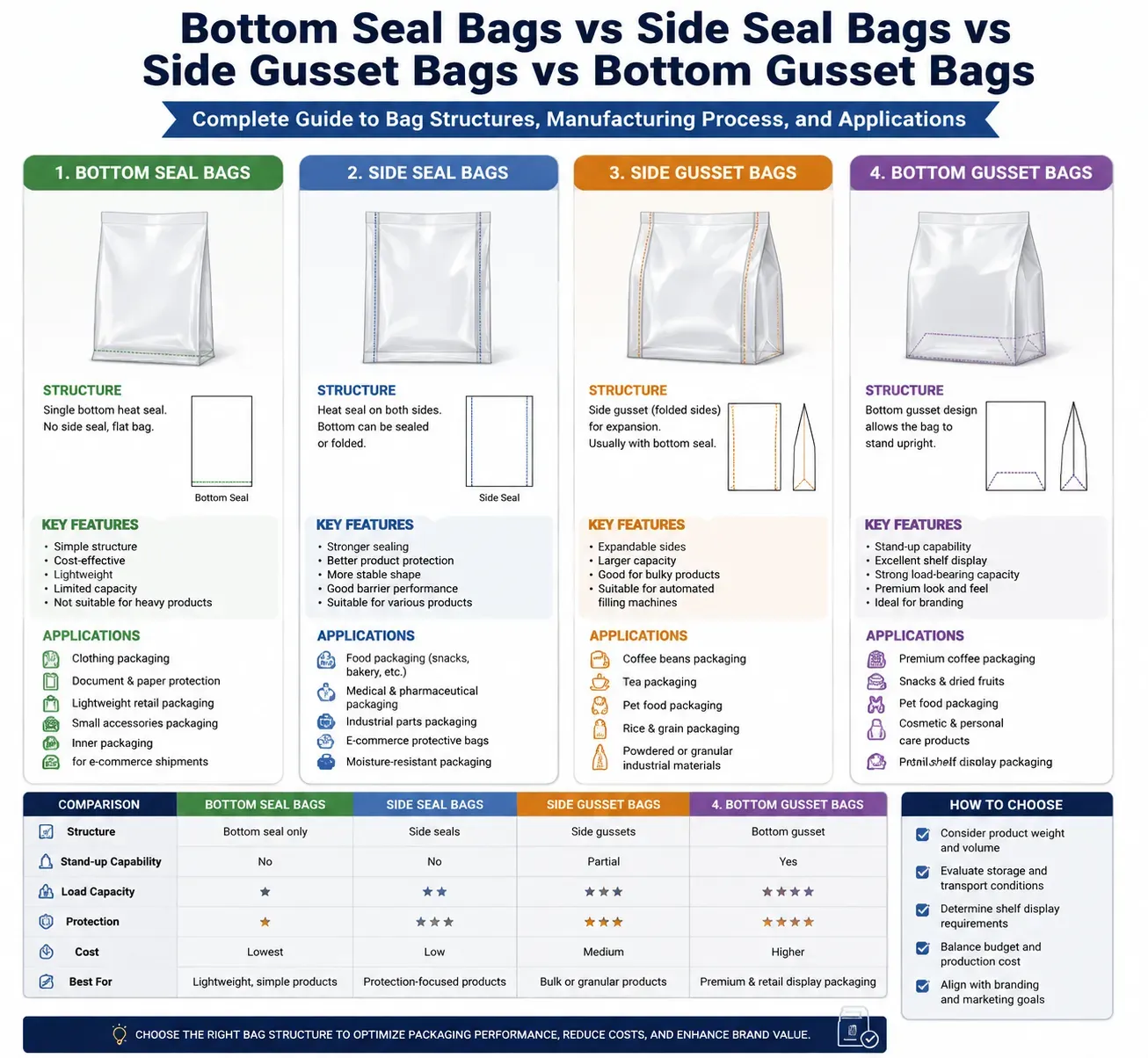
Plastic packaging bags are widely used across food, retail, industrial, and e-commerce industries. Among the most common bag structures, Bottom Seal Bags, Side Seal Bags, Side Gusset Bags, and Bottom Gusset Bags are frequently compared by buyers when selecting the right packaging solution.
Understanding the differences in their manufacturing process, structural design, and application scenarios is essential for choosing the most suitable packaging type for product protection, cost efficiency, and brand presentation.
This guide provides a detailed breakdown of these four bag types to help you make an informed decision.
1. Bottom Seal Bags – Simple and Cost-Effective Flat Packaging
Bottom Seal Bags are one of the most basic and economical plastic bag structures. They are produced by folding a plastic film and applying a heat seal at the bottom edge, forming a simple flat pouch.
Structure & Manufacturing Process
- Single bottom heat sealing line
- Flat sheet structure with no side expansion
- Fast production speed and low material waste
Key Features
Bottom Seal Bags are lightweight, simple, and cost-efficient. However, they have limited capacity and are not designed for heavy or bulky products.
Applications
- Clothing packaging bags
- Document and paper protection
- Lightweight retail packaging
- Small accessories packaging
- Inner packaging for e-commerce shipments
Bottom Seal Bags are ideal when cost control is a priority and product weight is minimal.
2. Side Seal Bags – Stronger Sealing and Better Protection
Side Seal Bags are manufactured by sealing both left and right sides of the bag, while the bottom may be folded or sealed depending on the production method.
Structure & Manufacturing Process
- Heat sealing on both sides
- Strong edge reinforcement
- More stable shape compared to bottom seal structure
Key Features
These bags provide better sealing performance and improved protection against dust, moisture, and contamination. They are commonly used for products requiring hygiene and safety assurance.
Applications
- Food packaging such as baked goods and snacks
- Medical and pharmaceutical packaging
- Industrial spare parts packaging
- E-commerce protective bags
- Moisture-resistant product packaging
Side Seal Bags are widely used where product protection is more important than display performance.
3. Side Gusset Bags – Flexible Capacity Expansion for Bulk Products
Side Gusset Bags feature expandable side folds (gussets), allowing the bag to expand when filled. This structure significantly increases internal volume and improves packaging flexibility.
Structure & Manufacturing Process
- Side folded gusset design
- Can be combined with bottom sealing or flat sealing
- Suitable for automated filling systems
Key Features
The expandable side structure allows the bag to hold more volume while maintaining a relatively compact flat shape before filling. This makes it ideal for granular, powdered, or bulky products.
Applications
- Coffee beans packaging
- Tea packaging
- Pet food packaging
- Rice and grain packaging
- Powdered industrial materials
Side Gusset Bags are especially popular in food and agricultural packaging industries due to their efficiency in storing bulk goods.
4. Bottom Gusset Bags – Premium Stand-Up Packaging for Retail Display
Bottom Gusset Bags, also known as stand-up gusset bags, feature a folded bottom structure that allows the bag to stand upright when filled.
Structure & Manufacturing Process
- Gusseted bottom design for stability
- Reinforced base structure for weight support
- Often used in laminated or high-barrier films
Key Features
These bags offer excellent shelf display performance and strong load-bearing capacity. They are commonly used for premium packaging where branding and visual presentation are important.
Applications
- Premium coffee packaging
- Snacks and dried fruits
- Pet food packaging
- Cosmetic and personal care products
- Retail shelf display packaging
Bottom Gusset Bags are widely chosen by brands aiming to enhance product visibility and shelf impact.
5. Key Differences Summary
Although these four bag types may appear similar, their structural design directly affects performance and usage.
- Bottom Seal Bags: Flat, economical, lightweight packaging
- Side Seal Bags: Strong sealing, protective packaging
- Side Gusset Bags: Expanded capacity for bulk products
- Bottom Gusset Bags: Stand-up premium retail packaging
Each structure is designed for specific product requirements, balancing cost, capacity, protection, and presentation.
6. How to Choose the Right Bag Type
When selecting the appropriate plastic packaging bag, consider the following factors:
- Product weight and volume
- Storage and transportation conditions
- Shelf display requirements
- Budget and production cost
- Branding and marketing needs
For example, lightweight clothing packaging may only require Bottom Seal Bags, while premium coffee brands usually prefer Bottom Gusset Bags for better shelf impact.
Conclusion
Bottom Seal Bags, Side Seal Bags, Side Gusset Bags, and Bottom Gusset Bags each serve different packaging purposes in modern industries. Understanding their structural differences helps businesses optimize packaging efficiency, reduce costs, and improve product presentation.
Choosing the right bag type is not only a technical decision but also a strategic branding choice that directly affects customer perception and product competitiveness in the market.